Thursday, May 22, 2025

Ready To Go Beast Mode With Movement 20XX?

It’s time to break free from the cookie-cutter gym grind and tap into something primal, something real. If you’re tired of soulless reps and chasing numbers that don’t mean jack shit for how you move in the real world, then Vahva Fitness’ Movement 20XX might just be the spark to ignite your inner beast. This ain’t your typical fitness program—it’s a philosophy, a lifestyle, and a damn powerful way to reclaim your body’s potential. Let’s really get into what makes this course a game-changer, straight-up.

What the bloody Hell Is Movement 20XX?

Movement 20XX, crafted by the Finnish fitness rebels Samuli Jyrkinen and Eero Westerberg, is Vahva Fitness’ flagship program. It’s a bodyweight-based system that blends strength, mobility, and flow into a holistic approach to fitness. Forget the bro-science of “lift heavy or go home.” This course is about moving like an animal, flowing like a martial artist, and building a body that’s as functional as it is jacked. Drawing from martial arts, gymnastics, calisthenics, and even a pinch of yoga, it’s designed to make you strong, limber, and ready for anything life throws at you.

The program’s core philosophy? Your body is built to move in a million dynamic ways, not just to pump iron in a straight line. It’s about mastering lizard crawls, animal flows, pull-ups, and movement patterns that make you feel like a predator, not a robot assassin. With a 6-month structured plan, HD video tutorials, and lifetime access, Movement 20XX is your blueprint to becoming a versatile, injury-resistant badass.

Why Movement 20XX Hits Different

Here’s the raw deal guys: most fitness programs are obsessed with making you work that "no pain, no gain" bullshit and "ground and pound" you into the earth instead of making you better. Movement 20XX flips that script. It’s not about redlining your body into a sore, broken mess. Instead, it’s about precision, control, and progression. Here’s why it’s worth your time:

Holistic Gains, No BS: This program hits strength, mobility, and flow in one insane package. You’re not just building biceps; you’re improving joint health, coordination, and agility. Lizard crawls and animal flows torch your core and make every joint in your body bulletproof. Many users of this program, who ditched kettlebells and other implements after battling lower back pain, reported feeling “amazing” after six months—stronger, more mobile and pain-free.

Going Beyond The Gym: You don’t need a fancy gym or equipment. A small room and maybe a pull-up bar are enough to dominate these workouts. Perfect for those of us who’d rather train in a park or at home than deal with crowded gym bros. The workouts are short—15 to 30 minutes—but don’t let that fool you. They’ll humble you, they've hit me hard at times and I still felt like a million bucks.

Cub to Beast: Whether you’re a couch potato or a seasoned athlete, Movement 20XX scales to your level. Beginners get clear coaching to nail the basics, while advanced movers can crank up the intensity with harder progressions. Maria, a mom who learned cartwheels for the first time, unlocked moves she never thought possible. That’s the kind of empowerment we’re talking about.

Fun as Hell: Let’s be real—most workouts are so tedious and boring. Not getting that crap here. The animal-inspired flows (think bear crawls, monkey walks, and low-flow rolls) and creative movement patterns keep things fresh. It’s like playing while getting shredded. Users rave about how the workouts “never get dull” and feel like a dance with your own body.

Injury-Proof Your Body: Unlike programs that grind your joints into dust, Movement 20XX prioritizes posture and structural balance. It’s helped a ton of people who had ankle, knee, and hip pain, move pain-free and build muscle. The focus on mobility and proper form means you’re not just chasing gains—you’re building a body that lasts.

The Gritty Details: What You Get

When you sign up for Movement 20XX, you’re not just buying a course—you’re investing in a transformation. Here’s what’s in the package:

Nearly 100 HD Videos: Eero Westerberg himself walks you through every move with crystal-clear demos. No guesswork, just precise instruction on what to do and what not to do.

6-Month Training Plan: Daily workouts and weekly schedules take the thinking out of your training. It’s plug-and-play, with progressions that evolve as you get stronger.

Five Core Elements: The program breaks down into lizard crawls, climbing, squats, static strength, and active flexibility. Each targets different aspects of movement, from explosive power to fluid grace.

Flow Routines: Eleven structured flow routines blend movements into seamless sequences. Think of it as choreography for your inner warrior. Plus, a free expansion library that adds even more flows to keep you progressing and learning.

Lifetime Access: Pay once. The Recommended Package which gives you the Full access to Movement 20XX. Your access never expires All content and bonuses included. 6-month training program plus a Special: Movement MasterClass is under $300. 

If you want to go for the Personalized Experienced which includes all the stuff the Recommended Course has but you also get an additional 3 months of online coaching with Eero Westerberg (Includes a personalized plan, 2 consultation/coaching calls, email support and form check analysis) which is at under $2500

Compare that to $60-$100 per session for a personal trainer who might not even get movement training.

Money-Back Guarantee: Vahva stands behind their product with a 30-day, no-questions-asked refund policy. That’s confidence in their system.

The Real Talk: Pros and Cons

No program is going to be perfect, so let’s cut through the hype.

Pros:

Transformative: Users report insane improvements in mobility, strength, and confidence. One 44-year-old dude said he felt better than he did in his 20s.

Versatile: Works for all levels, from newbies to pros like UFC champ Jiri Prochazka, who trained with Eero.

No Equipment Needed: Ideal for home workouts or travel.

Fun and Engaging: The creative flows make training feel like an adventure, not a chore.

Holistic Approach: Combines physical and mental fitness, inspired by Finnish grit and Eastern movement practices.

Cons:

Pricey Upfront: Paying 4 digits, it’s a quite an investment compared to apps like Cali Move ($60). Is it worth it? If you value true quality and lifetime access, hell yeah. But it’s not cheap.

No Native App: The platform is mobile-friendly, but it’s not a dedicated app, which can feel clunky on phones.

No Progress Tracking: You’ll need to track your own gains, as there’s no built-in system for logging progress.

Not for Everyone: If you’re all about bodybuilding or maxing out deadlifts, this might feel too “flowy” for your taste. It’s for those who want to move better, not just look bigger.

Who’s This For?

Movement 20XX is for anyone who wants to own their body, not just sculpt it. It’s for:

Fitness enthusiasts bored with repetitive gym routines.

People recovering from injuries who need a low-impact, joint-friendly program.

Athletes looking to boost performance in sports, martial arts, or dance.

Beginners who want a structured, scalable way to get fit without a gym.

Warriors who crave a challenge that’s as mental as it is physical.

If you’re the type who wants to flow like a panther, lift like a gorilla, and move without pain, this is your jam.

The Verdict: Is Movement 20XX Worth It?

Fuck yes, it’s worth it—if you’re ready to commit. Movement 20XX isn’t just a workout; it’s a mindset shift. It teaches you to move with purpose, to respect your body’s natural design, and to push your limits without breaking yourself. The price tag might sting, but with lifetime access and a money-back guarantee, it’s a low-risk bet on a stronger, more capable you. Users like Annie, at 65, gained mobility they never thought possible. That’s the kind of impact we’re talking about.

This program isn’t about chasing six-packs or ego-lifting. It’s about becoming a functional, confident, and resilient human. If you’re ready to ditch the treadmill and unleash your inner beast, Movement 20XX is your ticket. Check it out at and start moving like you were born to.

Now, go dominate. 💪

Stay strong, stay mighty and be amazingly awesome.

Shoot Me A Comment

Email Me Using The Contact Form

Share This Article On Social Media

Disclaimer: Always consult a doctor before starting any fitness program, especially if you’ve got pre-existing conditions. Train smart, not reckless.

Note: Prices and details are based on available info as of 2025 and may change. For the latest, hit up Vahva Fitness.

Wednesday, May 21, 2025

Unleashing The Power Within With Brooks Kubik’s Isometrics And Iso-Hold Strength Training


Time to talk about a course that may be overlooked in the modern age of Strength Training. Ready to learn some kick ass stuff? Then be prepared to forge strength, where sweat, focus, and raw power collide to sculpt bodies and minds into unbreakable steel. Today, we’re going to go into a tome of physical culture that’s as primal as a saber-tooth’s roar and as effective as a sledgehammer to a nail: Isometrics And Iso-Hold Strength Training by the legendary Brooks D. Kubik. If you’re chasing superhuman strength, tendon-snapping power, and a physique that screams “I conquer worlds” this book is your battle-axe. Strap in, because we’re about to tear through this masterpiece that's raw, real, and unrelenting.

Brooks Kubik, the five-time national bench press champion and author of the cult classic Dinosaur Training, doesn’t mess around. His Isometrics And Iso-Hold Strength Training isn’t some fluffy fitness pamphlet peddling quick fixes or Instagram-worthy poses. Hell nah, this is a manual for building strength that echoes the old-school greats—think Gama, Zass, and Jowett—while delivering practical, no-BS methods for modern iron soldiers. Kubik has been in the trenches, hoisting heavy iron for over half a century, and in his late 60's, he’s still crushing it in his home gym. The man’s a living testament to the power of his principles.

So, why isometrics, especially coming from one of the all time great Drug Free Lifters? Let’s cut through the noise. The internet’s full of keyboard warriors who’ll scoff, “Isometrics are worthless!”—probably parroting some bro-science they read somewhere where an "expert" wouldn't know his ass from his elbow. Kubik shuts that crap down with a single glance at his cover photo: a chiseled, muscular frame that screams, “I’m built by hard work, not hashtags.” Isometrics—exercises where you push, pull, or hold against immovable resistance—aren’t just effective; they’re a cornerstone of strength that’s been forging strongmen for a VERY long time. From Alexander Zass snapping chains in a POW camp to Bruce Lee’s shredded power, isometrics are the secret sauce for strength that lasts.

Kubik lays out the case with the precision of a blacksmith hammering steel. Here’s why from his perspective that Isometrics deserve a place in your training arsenal....

Isometrics are a godsend for older lifters or anyone nursing dings and dents. No ballistic movements to aggravate injuries—just pure, controlled tension. Kubik, a Dino who’s seen six decades of iron, knows that intensity, training doesn’t have to mean wrecking your body. Isometrics let you push your limits while keeping joints happy.

Got a sticking point in your bench press or deadlift? Isometrics let you zero in on specific ranges of motion, turning weaknesses into strengths. Push against a bar at your sticking point, hold it with max effort, and watch your numbers soar. It’s like laser-guided missile training for your muscles.

Isometrics demand focus sharper than a samurai’s katana. When you’re straining against an unyielding force, there’s no room for daydreaming. Kubik emphasizes that this mental intensity builds not just muscle but a mind-muscle connection that elevates every lift. It’s you versus the resistance, and you learn to own it with incredible intensity.

No gym? No problem. Isometrics can be done with a wall, a strap, or even your own body. Kubik shows how to integrate them with barbells, dumbbells, or bodyweight exercises. Short, intense sessions deliver massive gains without eating up your day.

Here’s where isometrics shine brighter than a supernova. While dynamic lifts build muscle, isometrics forge tendons and ligaments into iron cords. Kubik channels the wisdom of old-time strongmen like George F. Jowett, who swore by heavy holds to build unshakable strength. Stronger tendons mean bigger lifts and fewer injuries.

Muscularity and Definition

Pair isometrics with a solid diet, and you’ll carve a physique that’s both powerful and aesthetic. Kubik’s not about the comic book bodybuilding look—he’s about functional, rugged muscle that works. Isometrics crank up time under tension, sculpting slabs of lean mass that pop.

Isometrics And Iso-Hold Strength Training is part of Kubik’s Training Series, and it’s a lean, mean 100+ pages of pure gold. No filler, no bull—just actionable advice delivered with the grit of a man who’s walked the walk. Kubik breaks down the science and history of isometrics, from the ancient warriors who used static holds to modern studies proving their effectiveness (like those showing 70-75% MVC for hypertrophy gains). But this ain’t a dry textbook. Kubik’s writing is like a pep talk from a grizzled coach who’s seen it all, laced with stories of old-school legends and his own journey.

What does it cover?

The Why: A deep dive into why isometrics work, debunking myths and showcasing their benefits for strength, recovery, and performance.

The How: Practical protocols for integrating isometrics into your routine, whether you’re a powerlifter, strongman, or weekend warrior. Think 6-12 second max contractions, 60-90 second holds at 30-60% effort, or iso-holds in a power rack.

The What: Specific exercises, from wall presses and strap pulls to power rack holds and bodyweight isos. Kubik even throws in tips for using chains or belts, nodding to strongmen like Steve Justa.

The Who: Guidance for everyone—young bucks, grizzled vets, injured athletes, or desk jockeys looking to get strong without a gym.

The Mindset: Kubik’s all about mental toughness. Isometrics aren’t just physical—they’re a forge for your will, teaching you to push through discomfort and emerge stronger.

One standout is Kubik’s nod to “isometronic” training—short-range movements followed by static holds in a power rack. This hybrid approach, inspired by Jowett’s heavy partials, builds insane strength by combining dynamic and static stress. Picture squatting a heavy bar a few inches, then holding it motionless for 6-10 seconds. That’s the kind of brutal, effective work Kubik champions.

I’ve been hammering isometrics for years, inspired by the likes of Bud Jeffries, Steve Justa, and, of course, Kubik. It’s not just about the lifts or using your bodyweight. Isometrics, as Kubik teaches, are a mental game-changer. Holding a 90-second plank at 40% effort (try it—it’s harder than it sounds) or straining against a strap like Gama wrestling a tree forces you to confront your limits. You learn to breathe, stay calm, and push. That mental grit spills over into life—meetings, challenges, whatever. You become a force, unyielding and unstoppable.

I also love Kubik’s versatility. I travel at times and with his bodyweight isos—like pressing palms together or pulling against a towel—I can train anywhere. That’s the beauty of Kubik’s system: it’s simple, brutal, and effective.

Kubik’s no lone wolf. He stands on the shoulders of the all time greats—Jowett, Sandow, Zass, and Peary Rader—while carving his own legend. His Dinosaur Training revolutionized strength training in 1996, reminding a world obsessed with machines and steroids that real power comes from hard work and heavy iron. Isometrics And Iso-Hold Strength Training continues that legacy, shining a spotlight on a forgotten art and making it accessible to all.

What sets Kubik apart is his ethos: strength for life. In his 60's, he’s not chasing trophies—he’s chasing health, vitality, and the joy of hoisting iron. He and his wife, Trudi, grow their own food, hike, and live a life of rugged simplicity. Kubik’s not selling you a supplement or a gimmick; he’s giving you tools to forge your own path.

If you’re serious about strength, Isometrics And Iso-Hold Strength Training isn’t optional—it’s essential. It’s a masterclass in building power that’s functional, sustainable, and badass. Whether you’re a powerlifter busting through plateaus, an older lifter preserving your edge, or a newbie looking to get strong without a gym, Kubik’s got you covered. This book will make you rethink what’s possible, push you to train smarter, and ignite a fire for old-school training.

Be amazingly awesome and continue building your own journey. 

Shoot me a comment

Email me using the contact form

Subscribe to get articles sent to your email

Share this with your followers on social media

Tuesday, May 20, 2025

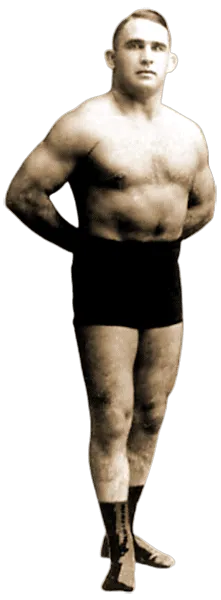
The Unbreakable Legacy of Ed "Strangler" Lewis: A Wrestling God Who Defined The Sport

You guys ready to talk about a straight-up beast—a man who didn’t just wrestle but dominated the squared circle like a force of nature. Ed "Strangler" Lewis wasn’t just a wrestler; he was a damn institution. A colossus of the early 20th century who made the world believe in the raw, unrelenting power of professional wrestling. If you’re ready to dive into the story of a legend who crushed opponents, revolutionized the game, had the endurance of a superhero and left a legacy that still echoes today, strap in. This is the tale of the one, the only, Ed "Strangler" Lewis. 💪

Born to Rule The Mat

Picture this: June 30, 1891, in Nekoosa, Wisconsin. Robert Herman Julius Friedrich enters the world, a kid who’d grow into a mountain of a man—250 pounds of pure strength and power with a chest measuring a monstrous 56 inches. This wasn’t just a guy; this was a gladiator in the making. By 14, he’s already tossing grown men around in Louisville, Kentucky, under the name Ed Lewis, a nod to 1890s star Evan "Strangler" Lewis and a sneaky way to keep his disapproving parents in the dark. Smart move, young champ. 😎

But where’d that "Strangler" nickname come from? Some say it was a tribute to Evan’s legacy. Others point to a wild story from a match in France where Lewis slapped on a sleeper hold so vicious the crowd thought he was choking his opponent out for real. Either way, the name stuck, and it fit like a glove. This man wasn’t just wrestling—he was shattering the competition’s hopes and dreams.

The Gold Dust Trio: Carving The Industry That Leads To An Ever Lasting Legacy

Lewis wasn’t just a grappler; he was a visionary, a mad scientist if you will. In the 1920s, he teamed up with promoters Toots Mondt and Billy Sandow to form the Gold Dust Trio, a game-changing crew that turned wrestling from one-off barroom brawls into a full-blown spectacle. These guys didn’t just book matches; they created events. Undercards, storylines, feuds that had fans losing their minds—this was the birth of modern pro wrestling as we know it. Lewis was the star, the muscle, and the brains behind it all. He didn’t just win titles; he built an empire. 🏆

And win titles he did. Lewis snagged his first World Heavyweight Wrestling Championship on December 13, 1920, by outclassing Joe Stecher. He’d go on to hold the world title five times (some say up to ten, depending on the record books), ruling the sport for nearly two decades. Over a career spanning four decades, Lewis wrestled in over 6,200 matches—legit shoot fights and worked bouts alike—and lost only 33 times. Let that sink in. That’s not a record; that’s a myth. The man was untouchable. He could go with anybody at anytime he wanted.

The Strangler’s Grip: A Style Like No Other

What made Lewis so fucking terrifying? His catch wrestling prowess. This wasn’t flashy flips or choreographed drama—this was pure unadulterated pain. Lewis was a master of "hooking," using brutal holds to make opponents tap or nap. His signature move? The Strangler’s headlock, a proto-sleeper hold that could put anyone to sleep—permanently, if he wanted. Lou Thesz, Verne Gagne, and others called him the greatest ever, saying he’d only lose when he chose to, to push a storyline. That’s power. That’s control. 😤

One of his wildest moments? September 20, 1934, at Wrigley Field. Lewis faced Jim Londos in front of 35,275 screaming fans, pulling in a record gate of $96,302—a mark that stood until 1952. Or how about 1936, when he took on Lee Wykoff in one of wrestling’s last legit shoot matches? Lewis, nursing a separated clavicle, still fought to a draw. The man was a warrior, plain and simple. Even in 1937, wrestling in New Zealand, he went 4-2 against top talent, only falling to Canadian champ Earl McCready. No one could keep him down for long. 

Rivalries and Real Talk

Lewis’s biggest rival? Joe Stecher. These two titans clashed in and out of the ring, even sparking one of wrestling’s first promotional wars when Stecher ran his own shows against Lewis’s Gold Dust Trio. Their most epic battle? A five-and-a-half-hour marathon on July 4, 1916, ending in a draw because neither man could break the other. That’s not wrestling—that’s war if there ever was one. Their feud hit a peak in 1925 when Stanislaus Zbyszko, a Gold Dust Trio star, double-crossed Lewis' camp by legit beating their handpicked champ, Wayne Munn, to humiliate them. Wrestling was wild back then, and Lewis was at the heart of it all. 🥊

But not every match was a classic. In 1933, Lewis faced Ray Steele (a legit wrestler himself) at Madison Square Garden for the title. The two circled each other, barely locking up, and the fans got bored. Sometimes, even legends have off nights. Still, Lewis’s ability to draw crowds, even in controversy, was unmatched. He was the Babe Ruth of wrestling, rubbing shoulders with the Yankee slugger and Jack Dempsey, the era’s biggest stars. Hell, there’s even a photo from April 16, 1935, of Lewis putting Ruth in a headlock. Iconic.

The Later Years: Blind but Unbowed

By 1935, Lewis was semi-retired, frustrated with wrestling’s shift toward “slambang” entertainment over real grappling. But the fire never left him. In 1942, at 51 years old and legally blind from trachoma, a brutal eye condition common in wrestlers, he stepped back into the ring. Think about that—a blind man wrestling. And he kept going until 1948, retiring at 57. That’s not just heart; that’s soul and the will to keep fighting. 💥

Even after hanging up his boots, Lewis’s influence lived on. He trained legends like Lou Thesz, his protégé, along with Danny Hodge, Dick Hutton, and Judo Gene LeBell, passing down his hooking secrets. Thesz became a world champ, carrying Lewis’s torch. The Strangler didn’t just shape his era; he shaped wrestling’s future. 

The Final Bell

On August 8, 1966, Ed "Strangler" Lewis passed away in Muskogee, Oklahoma, at 75. Newspapers across the country hailed him as a pioneer who made wrestling a global phenomenon. His health battles—especially the blindness that plagued his final years—never dimmed his spirit. He’d earned millions in the ring and spent it like it was nothing, living life as big as his legend.

Today, Lewis is immortalized in every major wrestling hall of fame: Wrestling Observer Newsletter (1996), George Tragos/Lou Thesz (1999), Professional Wrestling (2002), WWE Legacy Wing (2016), and International Professional Wrestling (2021). His name is synonymous with greatness, a reminder of a time when wrestling was raw, real, and ruled by legit grappling warriors.

Why Does The Strangler Matter

Ed "Strangler" Lewis wasn’t just a champion; he was a revolution. He took a gritty, underground sport and made it what we see today. He fought through injuries, blindness, and changing times, never backing down. He trained the next generation, ensuring his art would live on. In the 1920s and ‘30s, he stood shoulder-to-shoulder with Babe Ruth, Jack Dempsey and other greats, not just as an athlete but as a myth.

So, next time you watch a wrestling match, remember the man who laid the foundation. The man who strangled doubt, crushed rivals, and built a legacy that’ll never tap out. Ed "Strangler" Lewis—the original powerhouse, the ultimate might. 🏋️‍♂️

What’s your favorite Strangler story? Drop it below and let’s celebrate this crazed SOB together! 💬

Be amazingly awesome and learn the valued history of the great sport of Catch As Catch Can Wrestling.

Monday, May 19, 2025

Get Jacked with Isometrics: The Ultimate Power Hold for God-Tier Strength

What's up everyone, it’s time for some more kick ass stuff about Isometrics that has been forging unbreakable bodies since the days of ancient gods and gritty old-school lifters. A lost art of flexing so hard you make the universe jealous without moving a single inch. If you’re ready to crank up your strength, build a physique that screams “I HAVE THE POWER”, and dominate like an Olympian God, this one’s for you. Let’s dive into why Isometrics are just unbelievable and unleash the beast within you! 😤

Isometrics for the most part are like the quiet, stoic badass of the strength game. You push, pull, or hold against an immovable object (or your own body) with max effort, no movement, just pure, raw tension. Think of it as flexing so intense you’re basically telling gravity to sit down and shut the fuck up. Whether you’re pressing against a wall, gripping the Worldfit Iso Trainer like it owes you money, or locking your core in a plank that’d make a statue sweat, you’re building strength, stability, and mental toughness.

Why should you give a damn? Because isometrics is the Game Genie for unlocking superhuman strength and a body that looks carved from granite. Plus, they’re versatile AF—do ‘em anywhere, anytime, no fancy gym required. Just you, your will, and a whole lotta “I ain’t quittin’” energy.

Why Isometrics Is One of the GOATs 🐐

Strength Gains That Hit Like a Freight Train 🚂

Studies (Look into them) show isometrics can boost strength by up to 5-15% in just weeks. Why? You’re firing every muscle fiber at once, teaching your nervous system to recruit max power. It’s like overclocking your body’s CPU.

Build Muscle Without Moving 💪

No reps, no problem. Holding a max-effort contraction for 7-12 seconds can spark hypertrophy (aka muscle growth) just as well as grinding out sets. Your muscles don’t know the difference—they just know you’re making ‘em work with a vengeance.

Injury-Proof Your Body 🛡️

Isometrics are low-impact, so you’re not beating up your joints. They’re a godsend for rehab, prehab, or just keeping your body bulletproof while you chase those PRs. Injuries suck so here is a way to minimize that and still make some serious gains.

Mental Fortitude Forge 🧘‍♂️

Holding a max-effort iso is a battle of mind over matter. You vs. you. Every second you don’t quit, you’re forging a mindset that laughs in the face of your enemies of the mind.

Do It Anywhere, Look Cool Doing It 😎

No weights? No gym? No excuses. Push against a doorframe, hold a bodyweight squat, or flex your lats like you’re about to deadlift a Buick. Bonus: people will think you’re some kinda fitness ninja. Push/Pull against a pillar at the park, try to throw a tree like the Great Gama and cool other things.

How to Crush Isometrics Like a Warlord ⚔️

When you add Isometrics to your repertoire, here’s a playbook to dominate:

1. The Classic Wall Press (Chest, Shoulders, Triceps) 🏛️

Stand facing a wall, hands at chest height.

Push like you’re trying to move a mountain—max effort, no mercy.

Hold for 7-12 seconds, breathe like a dragon and give it almost everything you got.

Pro tip: Angle your hands to hit different parts of your chest. Feel that chest working!

2. Deadlift Hold (Posterior Chain Power) 🏋️‍♂️

Take a strap or Iso Trainer, stand it up at knee height.

Grip it, pull like you’re ripping the earth apart, but don’t move it.

Hold for 7-12 seconds. Your hamstrings and traps will thank you. Breathe, do not hold the breath.

3. Plank of the Gods (Core of Steel) 🛠️

Get in a plank, on the palms.

Brace your core like you’re about to take a punch from Thor.

Pull Your Hands & Feet towards your chest without moving For 7-12 seconds. Want extra spice? Add a side plank to carve those obliques. Again, pull the hands and towards towards each but no moving.

4. Doorframe Row (Back & Biceps) 🚪

Stand in a doorframe, hands gripping the frame at chest height.

Pull like you’re trying to collapse the house, keeping elbows tight.

Hold 7-12 seconds. Your lats will pop like never before.

5. Bodyweight Squat Hold (Quads of Destiny) 🦵

Drop into a half squat, thighs parallel to the ground.

Hold it like you’re sitting on a Clydesdale Horse ready to march into battle.

Aim for 7-12 seconds flexing the legs hard. Feel the burn, embrace the glory.

Pro Tips to Level Up Your Iso Game 🎮

Max Effort, Every Time: Don’t half-ass it. Give it close to your max force (70-85%) for short bursts to spark gains.

Breathe, Don’t Pass Out: Exhale slowly during holds to keep blood flowing and avoid seeing stars. Making the SSSS sound as well helps with blood pressure.

Mix It In: Combine isometrics with dynamic lifts or other bodyweight exercises. Example: hold a horse stance squat iso, then bang out 5 explosive bodyweight squats.

Track Your Holds: Time your holds or measure force (if you’re fancy with a dynamometer). Progress is power.

Mind-Muscle Connection: Focus on the target muscle. Visualize it growing stronger with every second.

Real Talk: Why Isometrics are NEEDED In Life 🗣️

In a world full of flashy fitness trends and TikTok workouts, isometrics are the OG, no-BS path to strength. They’re not just about building muscle—they’re about building you. The discipline to hold a position when every fiber screams “quit.” The power to push past limits. The swagger of knowing you’re stronger than yesterday.

Plus, you can do ‘em while stuck in traffic (flex those glutes!), waiting for your coffee, or even during a boring Zoom call (desk push, anyone?). Isometrics don’t care about your schedule—they just demand you show up and bring the heat.

Join the Isometric Revolution! 🌋

So, what’s it gonna be, guys? You gonna keep scrolling or start flexing your way to god-tier strength? Grab a wall, a bar, or just your own body, and start holding like your life depends on it. Share your favorite iso moves or epic hold times in the comments—let’s build a legion of the unmovable! 💥

Stay strong, stay relentless, and never stop chasing the grind. Be amazingly awesome.

Send me an email using the contact form

Share this on your Social Media

Thursday, May 15, 2025

2 Decades And It Still Haunts Me But Teaches Me Lessons Everyday


It's never easy having a memory like this. It's still embedded into my mind that will last the rest of my life. That spot that changed everything. One bad day becomes a haunting reminder yet still teaches me lessons that have kept me going all these years. A stupid mistake/accident by a 20 year old that had to learn new things beyond the physical about pain, suffering and fighting to get back.

20 years ago today, at this very spot was the day I was broken, physically, emotionally and mentally. It was sunnier, in the late morning, early afternoon and went here for a date where the girl I was hanging with brought friends along. Climbed up to the top of that long stretch of rock below the green. I was supposed to go all the way to the very end where the water would've been highest, I jumped more towards the middle like a dumbass (Red Foreman wouldn't hesitate to say this) and thought the water was still good but it went out within about a split second after I jumped and both feet landed on the very hard and rugged sand below. 

Because of my own stupidity, I shattered my left tibia fibula and both my ankles all in one shot. Everything felt weird and held up my leg to see it flop without me moving it. Luckily no bones broke through the skin but I heard the sound of them coming from the inside, I had a lady come over and asked me to try and stand up and I didn't want to get up. Two guys pulled onto the shore and I just laid there. The call that even at the time nearly killed my mother when she learned that I told her I think I broke my legs. I was laying there on the sand in the warm sun waiting for an ambulance which had to bring the Gurney down the cliff a few yards away. The girls and a couple other people kept me talking since the shock was hitting me like a freight train.

My dad and stepmom came around the time the ambulance showed up. Paramedics asked me all the general questions and was completely conscious to answer them all as best as I could. Asked the girls what happened and asked witnesses around there including the two guys who pulled me in. Because of where the vehicle was, they had strap me in and haul me back up the cliff which already has a very narrow pathway. Scary as hell to say the least. They got me in and one of the things the they asked is what music I like to listen to, for some odd reason I said AC/DC. 

Got to the hospital and because of the sand in my shorts, they had to cut them and wipe me down, it was everywhere. About a couple minutes into being in that room with people including my parents, a woman that helped raise me, her son one of my best friends and my stepmom, I just lost it. The true shock kicked in and I just balled and screamed right then and there like learning someone had just murdered someone in my family. Horrifying moment on top of what had already happened.

Had to go into surgery that night or so because the damage was insane. The bones in my left leg split to the point where repairing took some weird way to piece them but they couldn't stay straight or line up properly the same way ever again. Before they put me under anesthesia, they asked what I wanted to listen to to keep me calm, again I said AC/DC and they put on Back In Black. Most likely they turned it off the moment I was out but I do remember couniting and then just going to sleep.

I woke up later in a hospital room and was told about all these procedures I had to do. Not going into gross details so I'll leave that amongst yourselves. This was where the true beginnings of what would become my findings of inner strength to get back to walking again. I learned the value and the strength needed to pull myself up into a wheel chair. Got several visitors around that time, even the girls and my date from the beach, I felt horrible having them see me like that but I was nice and being friendly with them and I think the girl who jumped after me apologized or something along those lines and I shrugged it off and told her it was ok. 

Once I got the clearance to go home, I had a ramp built for me to roll up into the house and had to get a hospital bed put in the living room because the pathway from the living room to my room was extremely narrow. Everyday was a struggle and had friends and family come and hang with me and keep me occupied. Before all this happened, I was going to gold's gym and doing powerlifting and other training stuff, going to concerts in downtown Santa Cruz at a place called the Catalyst where famous bands played and it was a place to go with my Stepdad before he died, getting burgers and fries and watching a giants game. Those concerts in the atrium around 2004, roughly a year before my accident, was where I met Logan Christopher and reconnected with my neighbor two doors down from me Tyler Bramlett who was the Drummer for his band Archer at the time with guitarist Dylan Rosenberg (Goes by Dylan Rose now) and their Bassist Isaiah May if I have the last name correctly. They would play cover songs and their own stuff for battle of the bands and things like that. Logan was the guy who helped set up the equipment.

Logan & Tyler came around often either after workouts or before and talked to me about all this stuff about Physical Culture and about guys like Dennis Rogers, Jon Hinds, Bud Jeffries and many others. I believe they were the first ones to mention to me about Matt Furey and his combat conditioning book. Their the ones that gave me the tools to research all this stuff which is why I have always credited them as the guys that saved my life. They treated me like a brother and taught me how to be strong.

As the weeks went by and another surgery had to be done, I went to another hospital to get work done on my legs that needed a greater set of tools to operate and put things in. After a while, I got to be in my own bed. I did have an incident and fell flat on my left foot and thought something got damaged again. rushed to the hospital but was taken to one in Watsonville, not Santa Cruz and they didn't tell my mom so when she went to Keiser Permanente in SC, they couldn't find me there and ended up telling her I was in another town because of something going on with Ambulances being shorthanded or something like that. Remember about the narrow pathway to get to my room? Well the Gurney couldn't fit through so without any help, I literally dragged my legs and my ass backwards on my hands since I couldn't and wasn't able to get up on my feet.

I got a copy of combat conditioning and for the last few weeks before my last surgery, I read through that thing maybe a dozen times, learning everything. The final surgery was on July 29th, the day after my 21st birthday. I always joke that because of getting it done the next day, I couldn't have a beer on my own 21st birthday. So I advise those turning 21 to have fun as much as you can and don't be an idiot like me and get hurt. I was doing occupational therapy during the time between my second and third surgeries. Was told that my therapy would take roughly a year to let things completely heal after my surgery. I made the decision to do PT on my own, my way and everyone but a few friends and my mom were pissed at me that I was going to do that and were afraid for me making things worse. Within days after that last surgery, I started working on Hindu Squats, Hindu Push-ups & Bridges just like Matt suggested in the book. 

I couldn't do more than 10 squats, 15 pushups and my bridge was terrifying to look at at first. I kept at it every single day for a month, then switched to other exercises but ever since those first squats, pushups and bridge, I haven't taken one day off of doing exercise or a workout. I was just determined to fight with everything I had and it was painful as fuck and walking for more than 10 minutes exhausted me. By December of that year, I managed more than 1000 squats in a single workout, 1050 to be exact. Regular Hindu Squats & Jumping Squats for almost an hour, taking breaks when I needed to. 

For 20 years now, I still take those lessons and tools those guys gave me and kept the promise to myself to do something every single day no matter what. I've had set backs, little injuries, weight fluctuations and dealt with relationships, deaths, funerals, traveling and many other things but I still found a way to exercise because in my mind, if I don't, it's like losing a piece of my soul. It's my second language, the thing that drives me and what has led me to a life that has brought me many friendships, working doing what I love and promoting those that inspire me and it brought me to meet my wife when one of the last things she saw on our first date was when I bent a 60D Penny Nail for her. 

Although I still have some nightmares to this day of what happened, I' am grateful for what came to light and what I've become along the way and to say thank you to everyone who encouraged me and gave me the strength to keep doing this. You guys are incredible and I'm thankful for your support with this blog and putting up with some of my crazy shit all these years. You all are amazingly awesome, thank you.  

Sign Up

Contact Form

Name

Email *

Message *