Showing posts with label Greco-Roman. Show all posts

Sunday, March 15, 2026

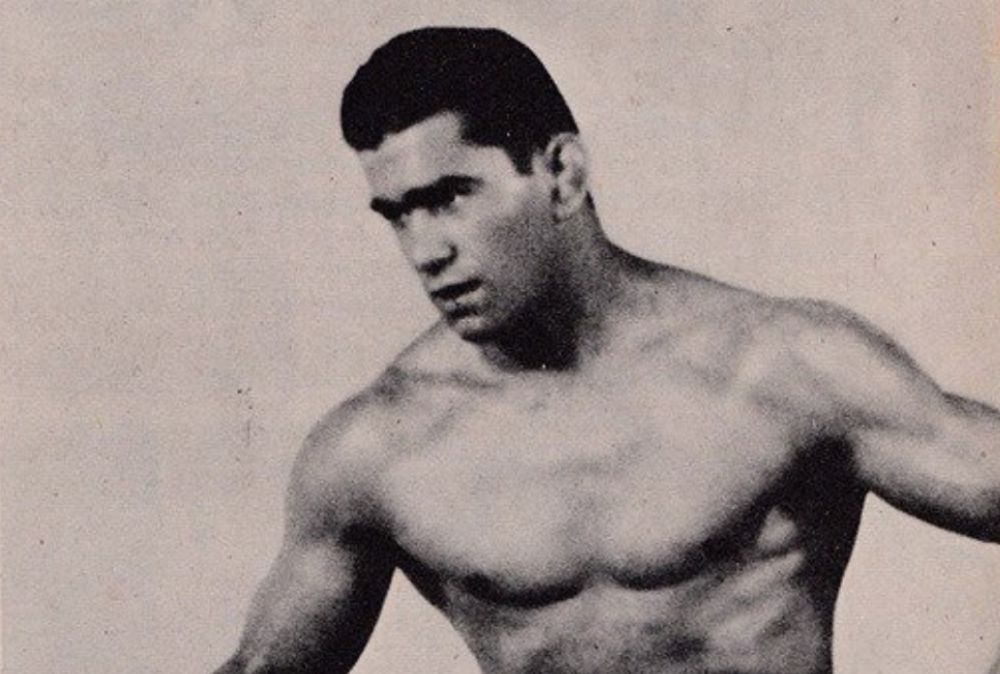
George Tragos: A Legendary Hooker That Laid A Foundation For American Catch Wrestling

George Tragos isn't a big name you hear even in most circles today especially in wrestling but let's help change that. To start, let's just point out that this wasn’t just some pretty boy showman prancing around under the lights. This dude was a goddamn hooker in the truest, most vicious sense of the old-school catch-as-catch-can wrestling game. A Greek immigrant who crossed the ocean with nothing but raw power, unbreakable technique, and a mean streak that that stretches to mars and back. He didn’t just wrestle, he broke men. He taught life lessons that left bruises and wisdom in equal measure. Most importantly may we add, he took a skinny kid named Lou Thesz and helped develop him into one of the greatest professional wrestlers who ever laced up boots. Without Tragos, nearly the entire lineage of real grappling in America looks a hell of a lot weaker.

Born March 14, 1897, in the rugged hills of Katsaros, Messinia, Greece, Tragos grew up breathing the same ancient air that birthed the Olympics. Back then, wrestling wasn’t entertainment, it was survival. It was honor. It was the ultimate test of a man’s will. Young Georgios (as he was known) absorbed Greco-Roman technique like it was mother’s milk. He dominated local tournaments, stacked amateur titles in Greece, and earned his spot on not one, but two Olympic teams for his homeland. Think about that for a moment: a teenager from a tiny village standing shoulder-to-shoulder with the best grapplers on the planet, throwing men around with hips like pistons and shoulders like cannonballs.

But Greece couldn’t hold him. In 1910 he emigrated to the United States, landing in a country hungry for real tough guys. By 1922 he was already coaching amateur catch wrestling at the University of Missouri in Columbia. Think about that timeline – the Roaring Twenties, Prohibition, gangsters, and Tragos quietly building killers in the heartland. He didn’t just teach wrist locks and half nelsons. He taught hooks. Those nasty, fight-ending submissions that separate the pretenders from the legends. Hooks that could tear ligaments, pop joints, and make a man tap or sleep before the referee even blinked. This was one of the most feared wrestlers of his time.

Then he stepped into the pro ranks himself. Debut 1922, mostly working the St. Louis territory where the crowds knew real wrestling from the circus acts. Tragos became the pro middleweight champion and earned a reputation that traveled faster than any railroad. The term Hooker wasn’t a compliment back then and sure as hell didn't mean prostitute, it was a warning, to let you know if you crossed one, they will put the fear of God in you if you crossed or tested them. One story that still gets whispered in old wrestling circles tells it all. Some young hotshot decided to test the brutal Greek in the gym. Tragos knew what he had to do, locked in I believe a double wrist lock, and drove it home before the kid could even scream “uncle.” Ripped muscles, torn tendons, separated bone – the arm got infected and the poor bastard had it amputated. Legend says he didn’t lose a wink of sleep. That’s the kind of ruthlessness this guy was. No mercy. No apologies. Downright psychotic.

His real legacy wasn’t the titles he won or the arms he ruined. It was the beast he created in a young Lou Thesz. Thesz himself said it best: “George Tragos was a great wrestler and a great human being. I’ve learned more from him, about life as well as wrestling, than I could ever possibly repay.” 


Tragos didn’t just show Thesz moves – he poured the entire ancient science of catch wrestling into him. The intricate counters. The psychology of the ring. How to chain submissions so seamlessly that your opponent never knew he was caught until it was too late. Greco-Roman base meets American catch-as-catch-can grit. Tragos bridged the old world and the new. He taught this future legendary figure the same way the old masters taught him – through pain, repetition, and relentless pressure.

Could you imagine those sessions? Hour after hour in smoky St. Louis gyms. Thesz, still a teenager, getting twisted, stretched, and submitted until his body screamed. But Tragos was there every step, refining that iron will. The same will that let Thesz hold the NWA World Heavyweight Championship for years and years. Three-time champ that was held across different eras. The man who carried professional wrestling on his back during its golden age. All of it traces back to the brutal Greek who saw potential in a raw kid and refused to let it go to waste. If Thesz was ever tested in his career, those instincts from those times with George would kick in almost automatically. Unlike Tragos, Thesz didn't want to hurt anyone unless it was a last resort. 

Tragos himself traveled the Midwest as a true professional. He coached young men wherever he went. He lived the wrestler’s life – hard roads, harder matches, and an even harder code. He passed away on September 5, 1955, in St. Louis at just 58 years old. Right on the cusp of the television explosion that would make wrestling a national obsession. He never got to see the full spectacle his pupil helped create, but his fingerprints are all over it. Thesz may have been more known to be the student of Ed Lewis, but before Ed, Thesz was learning the dark and brutal entities of what a Hooker was in those days.

And that’s why the George Tragos/Lou Thesz Professional Wrestling Hall of Fame carries his name. Posthumously inducted in 1999 alongside his greatest student, the hall sits inside the National Wrestling Hall of Fame and Museum. Every year the best of the best – guys with amateur roots who made it in the pros – get honored there. The George Tragos Award goes to wrestlers who take that same competitive fire and adapt it to mixed martial arts or other combat sports. It’s fitting. Because Tragos wasn’t just a wrestler. He was the prototype for the modern hooker.

Compare him to the legends I’ve written about before. The Great Gama with his endless Hindu squats and dands – pure conditioning beast. Ed “Strangler” Lewis, the gorilla-built stamina monster who could wrestle five partners for hours and still be fresh. Joe Stecher and his deadly scissors. The Greek Legend sits right there with them, but in a different lane. He was the teacher. The bridge. The guy who took the old Greco-Roman purity and weaponized it with American catch brutality. He didn’t need 5,000 daily squats to prove his worth (though I bet he could have done them and not be winded). He proved it every time he stepped on the mat and made bigger, stronger men quit.

In today’s world of Instagram athletes and choreographed spots, guys like this feel like ghosts from another dimension. No flash. No drama. Just hooks, heart, and hellish training. He reminded everyone that real wrestling isn’t about entertainment – it’s about dominance. It’s about being the last man standing when the lights go out and the crowd goes home.

If you’re training today – whether it’s catch wrestling drills, old-school isometrics, band-resisted leg work to build those Stecher-style scissors, or just grinding out heavy pulls – channel George Tragos. Lock in that wrist like it’s your last match. Build the kind of strength that doesn’t just look good in the mirror but can actually end a fight.

He didn’t chase fame. He chased mastery. And in doing so he created a legacy that outlives every title, every win, every broken limb. The hall of fame, the students, a catch wrestling bloodline, a lot of it flows from that Greek immigrant who refused to be soft.

Be amazingly awesome and kill it in your endeavors. 

If you wish to get contact with me, here's my LINKTREE for all my Socials and Email.

Monday, January 5, 2026

From Farm Boy to Beast: The Unstoppable Journey of Dan Severn and What It Teaches Us About True Strength


As part of this new year in 2026, I've been reflecting on what it means to build real, lasting power—not just in the gym, but in life. You know, the kind of strength that comes from grinding through setbacks, adapting your training, and never letting failure pin you down.  One of the books I've read at least twice, about one guy who always stands out is Dan "The Beast" Severn. If you're into wrestling, MMA, or just tales of sheer resilience, his autobiography, The Realest Guy in the Room, is a goldmine. It's not just a bio; it's a blueprint for turning humble roots into legendary might. Today, I want to unpack his epic journey, draw out the inspiring lessons, and tie it all back to how we can apply that beast-mode mentality to our own training and lives. Are you ready? Let's hit it....

Let's start at the beginning, because Dan's story screams "underdog origins." Born in 1958 as a Mid-Michigan farm boy, Dan Severn grew up in Coldwater, a small town where hard work wasn't optional—it was survival. See this in your mind's eye: a kid hauling hay bales, milking cows, and wrestling siblings in the barn before he even knew what a mat looked like. Farm life built his foundation—raw strength from manual labor, mental toughness from early mornings and endless chores. By high school, Dan exploded onto the amateur wrestling scene. He wasn't just good; he was dominant. A two-time state and national champion, he set eight national records. We're talking pinning opponents who outweighed him by 100 pounds, all while weighing in at the lower end of heavyweight. His recruitment? Historic. Colleges lined up, and he chose Arizona State University, where he became a two-time All-American. If you're reading this and feeling like your starting point is too ordinary, remember: power isn't born; it's built, one rep, one hay bale at a time.

But here's where the story gets REAL—and really inspiring. Dan had Olympic dreams locked in. We're talking 1984 Los Angeles Games, where he was a top contender in Greco-Roman wrestling. He was an alternate twice, silver medalist at the 1980 NCAA Championships— the guy was primed. Then, bam: injuries struck. A nagging knee, back issues from years of takedowns and bridges. Worse, backroom politics and controversial decisions at the trials derailed him. No gold medal, no glory. Instead of breaking him, though, this setback fueled a pivot that changed combat sports forever. With a family to support—Dan was married young and had kids—he needed to provide. Traditional jobs? Not cutting it. So, he turned to the wild world of no-holds-barred fighting. Enter the UFC in its raw, early days—1994, UFC 4. No weight classes, no time limits, just pure survival. Dan, at 36 (ancient by fighter standards), stepped in with his wrestling base and became "The Beast." He didn't have flashy kicks or punches; he had ground control, submissions, and an unyielding will. In UFC 5, he won the tournament, then the Superfight Championship, and capped it with the Ultimate Ultimate 1995 title. Boom—UFC's first Triple Crown winner. His MMA record? A staggering 101 wins, 19 losses, 7 draws, fighting until age 52. That's not just longevity; that's legendary grit.

What makes Dan's MMA rise so powerful is how he adapted. Coming from amateur wrestling, where strikes were forbidden, he entered a cage where anything went—elbows, knees, headbutts. Yet, he dominated with grappling. His style: take 'em down, control the position, submit or ground-and-pound. Pioneering stuff. He beat legends like Oleg Taktarov and Tank Abbott, proving wrestling could rule in mixed martial arts. But it sure as hell wasn't easy. Early UFC had no gloves, minimal rules—pure chaos. Dan talks in his book about the fear, the unknown opponents, and the physical toll. One fight, he dislocated his shoulder mid-match but popped it back and kept going. That's the beast mentality: pain is temporary, quitting is forever. Dan didn't burn out; he evolved. He incorporated judo, sambo, even pro wrestling moves to stay ahead. Speaking of which, let's shift to his pro wrestling career, because that's where "The Beast" became a household name beyond the cage.

Started in '92 being trained by Al Snow in pro wrestling, by 1995, while holding UFC gold, Dan won the NWA World Heavyweight Championship—the same belt legends like Lou Thesz held. He was the first (and only) to hold MMA and pro wrestling world titles simultaneously. His WWF stint in the late '90s? Iconic. Managed by Jim Cornette, he brought real credibility to the Attitude Era. Remember the Brawl for All tournament? Dan advanced but withdrew to avoid injuring scripted stars. He feuded with Ken Shamrock, blending real MMA with entertainment. Even in Japan with promotions like RINGS, he was a monster. What is incredible is how Dan stayed authentic—"the realest guy in the room." No fake personas; just a mustached farm boy who could suplex you into next week (Even Sheikey Baby knew this). His pro wrestling gigs made him a hot free agent, mimicked by guys like Brock Lesnar. But Dan never forgot his roots. He ran wrestling schools, coached, and emphasized fundamentals: strong neck, core stability, mental prep. Neck training, folks—that's huge. In my recent posts, I hammer on building a strong neck using isometrics and other things such as bridges and the Neck Flex. Dan's career shouts like a war cry why: wrestlers and fighters take hits to the head, but a thick, strong neck minimizes concussions and injuries. He built his to tank punishment, and at 67 now, he's still coaching without regrets.

Dan's story isn't just about wins; it's about the powerful lessons in failure and reinvention. After Olympic dreams crashed, he could've given up and walked away. Instead, he provided for his family by turning those setbacks into fuel. His initial MMA bouts? He lost some, but learned. That resilience? Gold for us. I've dealt with sciatica and other things—stuff that would give me many reasons to give in, but like the beast, I adapted: more bodyweight flows, band work with DopamineO (use code POWERANDMIGHT for discounts!), and mindful recovery. His book pulls no punches on the dark sides—divorces, financial struggles, the toll of 120+ fights. Yet, he emerged stronger, a UFC Hall of Famer, inspiring generations. Think about it: from farm chores to cage dominance, Dan shows that true power comes from authenticity. Be real—whether it's the gym, office, or home. Don't chase hype; build sustainable strength. Train smart: mix high-intensity circuits (like my Broadway Workout—29 rounds of hell!) with yin recovery workouts. Focus on neglected areas—neck, grip, core—to prevent breakdowns. And mindset? Unshakable. Dan didn't have cauliflower ears or a tough-guy scowl; he had quiet confidence.

Wrapping this up, Dan Severn's journey is a testament to what happens when you refuse to stay down and keep fighting. From Mid-Michigan fields to UFC cages and wrestling rings, he became "The Beast" not by luck, but by relentless adaptation and heart. If you're grinding through your own setbacks—maybe a stalled fitness plateau, life curveballs, or just needing motivation—channel Dan. Start small: add bridges to your routine for that beast neck, hit a sandbag session for wrestling vibes, or just reflect on your "why." His story proves: injuries heal, dreams evolve, and true might comes from within. Keep killing it out there, folks. Be amazingly awesome and stay balanced. What's your takeaway from Dan's tale? Drop it in the comments. Until next time, train hard, recover smarter.