Tuesday, December 20, 2022

If You Ain't Squatting, You Ain't Training

Who the fuck came up with this rule? Why isn't it training if you don't squat? Granted squats are essential but what kind of squatting are we talking about? Are we talking about High Repetition? Holding certain postures? Lifting a crazy amount of weight? All the above? What do we know what's right or wrong with training the squat?

I think it depends on the goals you have and what variations constitutes a squat type of training or part of a regimen. Squats again are essential but because of the plethora of variations, it doesn't have to be one or the other. When it comes to high repetition, it can be debatable depending on who you ask. Now something like 500 Hindu Squats is a great goal but is it a complete necessity outside of sports conditioning? There are plenty of fighters and wrestlers who can do 500 Squats like it's a cake walk but not all of them last in an actual match (which in a perspective is counterproductive don't you think?). High Rep squats can be healthy if you have experience and are consistent with it and it wouldn't matter if you did 100 or 1000 a day but there comes a time where high rep squats can be harmful to an extent. You're not going to see many 80-90 year olds doing 300 or more squats. 

Unless you have specific goals, you can do high reps in total with multiple variations to really reap the benefits. Do 50 of Hindu Squats, 25 Side Lunges each side, do several Pan Squats (Bodyweight Goblet Squat basically) and others. Step-Ups is great for leg conditioning as well to strengthen the legs unilaterally. Sometimes doing less number of squats can be good because you can do them slower to really tackle the tendons and ligaments. Some people think if you train slow, you'll be slow, that's not necessarily true. When you do Squats or variations at a slower pace say ten seconds or more up and down, it creates that time under tension which for older folks or those who have sustained injuries, can be extremely beneficial.

I would do various squats within a good level of repetitions but I prefer Step-Ups and Isometric Squats and Lunges which really help strengthen the joints from another perspective and give that protective shield for the skeletal structure. Wall Sits, Iso Zercher Squats, Iso Leg Presses, 30 second Hindu Squats and Isometric Lunges (Hybrid Style) can do far more for the legs as we get older than doing hundreds of reps. I've done 500-1000 squats and as great as that was for a period, it doesn't have as much value to me as it use to be. Quite frankly, some of the best squatting exercises aren't stationary but moving within an amount of space such as Duck Walks, Bigfoot Walk, Frog Jumps or combining the squat into a sequence of animal moves

Lifting extremely heavyweight may work for a powerlifter or strongman but again, you can't go that hard forever and expect to not have some form of injury or needing some kind of surgery. An extreme few exceptions in the entire world can manage some incredible numbers in the heavy squats and still function later in life. Hip replacements, broken bones, shattered femurs, ankle breaks and low back pain are going to be the majority's life if they continue that path. 

When it comes down to it, we squat a lot as it is in our lives; picking up stuff, putting on our shoes, getting baskets of laundry, being at the level of a child, gardening and other things. It's a natural form of movement no question but to say if you ain't squatting, you ain't training is like saying if you're not going fast on the streets like in Nascar, you're not really driving. There's a time and a place for squats but the question is, what squats are a priority and what style are you talking about? 

You don't have to do traditional squats to get awesome benefits for the lower body, in reality, the unconventional ways are far more interesting than to just shove rep after rep down someone's throat. Build strong and durable legs, be resourceful and keep being amazingly awesome.

Share, Comment & Sign Up. 

Monday, December 19, 2022

Are Certain Training Styles Replaceable?

 As we continue on our journey of discovery, some things may get lost along the way, we change things up and we may replace something and exchange it for something else but what is really replaceable? We hear or read someone say "you can do implements but they can't replace bodyweight exercises" or something vise versa. You can say whatever and still say nothing will replace this or that, why even care what could or can't be replaced?

No one method is vastly superior than the other however; some are questionable, others are essential and plenty are out there that just seem ridiculous but in the end, it all boils down to what benefits you and helps you stay healthy and strong in the long run. We live in an age where countless fitness programs, nutrition and equipment are at our fingertips but at the same time, we are overwhelmed and frustrated with what works and how to apply it to our lives when one person says one thing but another says something else and shoves his "expertise" down your throat. Hell, even people who will say they're stuff is the very best and no one else comes close to what they have or can provide....Bullshit, that's the best word to describe those types of people.

When it comes to training, you can't use a word like replaceable as if its like your favorite book got torn to shreds and have to replace another. Certain things have more value than just as an object. There are certain things you just can't replace no matter how hard we may try. The word replaceable is merely about materialistic things but it can also mean switching things out for another in order for something to work. When it comes to fitness, why replace something that works for you? Unless you're doing the same damn thing and expecting something different, doing what works is truly irreplaceable.

It's one thing to switch things out, it's another to take something all together and exchange it for something else entirely. Sometimes we do need to switch things up in order to grow but also at times we need to learn something new in order to understand how it works or doesn't work. If it works, you can make it successful for yourself, if it doesn't it's not meant to be. When I do my own training, I back away from certain exercises, programs and such and go other routes because I hate the idea of being stuck in a rut and just focused too much of the same things. It's like watching your favorite movie or reading your favorite book, you can't just watch or read the same thing over and over and expect a different thing to come along; you branch out, learn other genres, you can always go back to your favorites but it's also important to explore the possibilities of what could be great for you to watch or read that you can grow to love. You don't replace what's already there, you compromise what you have with what you learn from other things.

My favorite form of exercise is bodyweight exercises as you've read or heard from me in the past but that doesn't mean it's the only way or it's superior to other forms of training. There are methods and exercises that hit muscles bodyweight exercise can't touch, there's also more interesting exercises than just push-ups, squats, pull-ups and sit-ups. You find the value in what gives you the greatest benefit. Nobody should tell you what's replaceable and what's vastly superior according to Pseudo-Analysis or what method statistically generates greater strength and health. You decide what works for you.

Nobody can tell you what made you successful. It's important to be shown the basics and then you can figure out what works best for you. I can show you the resources that constitute a foundation, but I can't build your skyscraper, mansion, yacht or cabin for that matter. Some will try to sell you the idea that they can build you monuments when in reality they only build you shacks. You get to pick and choose how you build your fitness success, we just give you the tools. 

Hope you all are having a wonderful holiday season and making the most with the people in your life. Be safe, stay strong and keep being amazingly awesome.

Share, Comment & Sign Up. 


Thursday, December 15, 2022

Yielding Isometrics And The Benefits


Although I'm more on the side of Overcoming Isometrics, Yielding versions still hold merit especially if you want to develop strength from another platform. For those playing the home game, Yielding Isometrics is a style of training where you're going against gravity and keeping still for short or extended periods of time. The most common example would be the "almighty" plank whether on the forearms or on the palms of your hands. 

Some people have set world records in the plank position but it's not necessarily the only type of Isometric exercise that produces killer results. There's the Wall Sit, the Horse Stance, Side Planks, The Superman Hold (Arms Extended Out), The Warrior Pose in Yoga, The Gymnastic Bridge and all sorts of ways to do Yielding Isometrics. Each one has it's own variations and progressions but that's just the tip of the iceberg.

One of the things that I get a kick out of these kinds of Isometrics is that they can deceivingly hard and many have trouble holding certain positions for more than 10-30 seconds. Another thing is when you get into a certain position, many things are going on beyond just the sight of the exercise itself. You're trying to control the posture, your breathing, prevention of collapsing and targeting areas of your body you don't always realize you're targeting.

Back to the plank for a sec. I've held multiple variations for up to 3 minutes at a time and the key aspect is not just what's going on inside the body, it's about learning to be in control despite what is around you. One of my favorites is the Fist Plank whether holding straight up or with bent elbows, it's one of the most powerful core building exercise around. Holding it even for a minute can help you develop some serious strength. The Wall Sit is another favorite because you can do several variations from flat footed to heels up, toes up, one-legged or whatever. This was one of the exercises that helped me during my rehab. 

One of the toughest of them all was the Gymnastic Bridge. This exercise alone is brutal from head to toe even though your feet and hands are only touching the floor. In Yoga it's called Chakrasana and it takes a tremendous amount of Strength & Flexibility just to get into the position, let alone hold it for an extended period of time. This particular bridge is one of the most result producing exercises in existence. 

What are the benefits of these? First off, they can be done just about anywhere and anytime, think about how much time and money you can save just doing these exercises for a few minutes a day. Now, it is important to do dynamic movements as well but adding the Yielding Isometrics either as a warm-up, cool down or in between sets of your regular training can really give you a run for your money. Second, the longer you hold a pose or particular position, sooner or later the whole body will come into play and it will harness the power of fat burning and toughening your tendons and ligaments like steel. They're a hell of a strength and conditioning form of training. 

In sports like Wrestling, holding various positions and toughening the body can make you feel immoveable. The Wall Sit in particular is a love/hate exercise for wrestlers because it's either going to most likely end up being the first or last exercise of a practice and after drilling, conditioning and training until near exhaustion, doing any sort of isometrics would be far from the list of the last things to do because you'll be quivering and shaking like an earthquake is happening, your muscles are shot to hell and you're just so fucking out of it at times you won't always know what day it is. But it is effective.

The Horse Stance is a basic exercise that has been done by practitioners for thousands of years to the point where some of the strongest masters of qi gong, shaolin training and even Yoga can hold that one pose for mere hours without fail. Just holding it for 5 minutes would make most people drop to their knees let alone be able to concentrate for more than 1-2 hours. 

Try a few exercises for no more than 30 seconds and see how they feel, if you can go longer than do so. Remember, even a few minutes will make most quit but in the end, you're not setting world records or try to show off your strength, it's about the journey and getting the most out of it. Strength is more than just lifting, in a sense, Isometrics like these are a great metaphor for keeping yourself strong and composed in the midst of adversity. They could skyrocket your conditioning to another level. Try this workout for 5-10 minutes. Do Tabata Style timing of 20 on/10 off of the Horse Stance & Fist Plank.  

Stay strong, hold on for dear life and keep being amazingly awesome.

Share, Comment & Sign Up

Tuesday, December 13, 2022

Step Ups & Minor League Baseball


It's interesting how you find certain exercises you wouldn't expect to find in certain areas of sports let alone in fitness. Step Ups is one of those exercises that gets pushed back by the wayside because there are fancier and cooler looking exercises that make this exercise look "inferior" or as one jackass likes to call them the Lazy Man's Leg Training. It's actually far from inferior than people are led to believe. Even the legendary powerlifter and strength historian Terry Todd believed in the benefits of the Step Up.

I found an article recently on how Minor League Baseball players would train with Step Ups to keep up with their strength and stamina since most teams don't have the million dollar facilities and access to elite coaches in the Majors. The article is a little over 5 years old but it still holds true to the extent that you won't always have the best of the best when it comes to equipment and getting coached by the masters of strength and conditioning so you go back to the basics. 

It does take a solid level of conditioning to play the game if you want to rise to the top. If you want to give a full on analysis on players that play at the very best in their field, you have to look at the conditioning and longevity of Rickey Henderson. This was a guy that could do just about anything on that field and his statistics at the plate and on base was a once in a lifetime sight. I've seen this guy during my childhood steal bases like it was nothing to him, nobody could catch him and was the most powerful leadoff hitter in history with nearly 300 homeruns. What was his conditioning method? Basic push-ups, sprints, squats and sit-ups. Guys in the locker room hated yet admired what he was capable of and rarely ever saw him move weight.

What does this have to do with Step Ups and the Minors? The main reason is because even at the major league level, it's still important to understand that you don't need a million dollar facility or access to elite coaches to get in top condition. You can't completely get elite base stealing speed from heavy squats and sure as hell won't hit jaw dropping homeruns from a 500 lb bench press. Step Ups give the legs a different output to say bodyweight squats but both have the ability to give the legs incredible strength and stamina. The Step Ups will always be an underrated Leg Exercise and yet it's variations can take your conditioning to another level.

I love the game of baseball ever since I was little watching the likes of Henderson, Barry Bonds, Barry Larkin, Albert Bell and pitchers like Greg Maddux, Roger Clemens, Mariano Rivera and Rob Nen. These were some of the greatest the game ever had and yet only 3 of these men are in the Hall Of Fame. I even love the stories of the dead ball era and the dominance of Babe Ruth in the roaring 20's, the history of the Negro Leagues and how one of the last players ever was a hero to my father in his childhood. In the old days (I'm talking from Christy Matthewson, Ty Cobb, Honus Wagner to Cool Papa Bell and Satchel Page), fancy equipment didn't exist much in their day and the hard travels in buses, trains and lemon cars made them tough bastards. They didn't do a ton of "conditioning" per se and did what was possible with what they had and just played the game hard. 

Whether a little leaguer or a Major League legend, basic exercises will get the job done and being in top condition can be practiced anywhere if you know what to look for and have the knowledge. The Step Up is just one of those bad ass movements that can turn you into an elite machine and who knows, maybe one day if you're ambitious for the Big Leagues you could hit like Wagner, Run like Henderson, have the quickness of Brooks Robinson or Ozzie Smith or have the legs of Willie Mays. Try your hand at Step Ups and see the benefit of having powerful but durable and well conditioned legs. 

Train well, little by little reach your goals and be amazingly awesome.

Share On Social Media, Comment & Sign Up. 

Monday, December 12, 2022

Tabata Training For Micro Workouts

Tabata Workouts has been a trend for a number of years now and it has helped develop some pretty incredible results. The way it works is that you go hard for 20 seconds and rest for 10; repeat this for a total of 4 minutes or the equivalent to 8 rounds. Some do sprints, push-ups, squats, sit-ups, burpees and other forms of conditioning exercises. 

It's another idea to look at Micro Workouts where you don't have to do something very long but it's intense enough to really get you going. I approach it a little differently where I would take certain exercises (mainly isometrics and animal moves) and work them good instead of just typical bodyweight movements and fast paced exercises. For instance, yesterday I did an Isometric Workout using the Tabata Style timing but went for a total of 5 minutes instead of the typical 4. This consisted of holding the horse stance and the fist plank, going back and forth. The fist plank is a bit harder to hold than the palm version because of balance and the engagement of the tendons, ligaments and the core muscles. Managed to get through it very well and although it wasn't very challenging, it's still a good micro workout to build strength in a different way.

Isometrics aren't always just holding a position for a few seconds and moving on. They can be taxing when you really put them into perspective. When you do them Tabata Style, you don't just change an exercise on the fly, you have to be in control of the hold as well. A much harder Tabata Isometric Workout would be for the Core which consists of 3 exercises (The third is where you do one side and then the other) that really tackle the abs, lower back and obliques like crazy. I learned it from Red Delta Project which you can find here...No sit-ups or crunches, just pure intense isometrics that could make you feel more sore than dynamic movements.

Another approach to Tabata Style is doing the timing in reverse (10 on, 20 off instead of 20/10) and work certain exercises that way. I've seen Johnny Grube do this with his Rogue Bike for Sprint Training and regardless of how I feel about his idiotic rants, I respect his training style and it inspires me to do similar things (remember my workouts using the sandbell and step-ups? Those were inspired by him) so I took that approach and did a workout for 8 rounds of 10/20 doing Bear Crawls which is pretty intense and will get you huffing and puffing like motherfucker. As you know, Bear Crawls are one of the most rugged exercises to get you in shape quick, this is a great way to tackle them in a short period of time. 

Micro Workouts save you a bunch of time and can get in a workout in less than a few minutes than many can in an hour or more. Short and intense training builds a level of conditioning that gives off a different feeling. Explosive and resting very little in comparison to a 10 rep set and resting for like a minute. When it comes to Isometrics, it's being able to hold and switch very quickly and although 20 seconds may not seem like that long, depending on the kind of exercise, it can be so intense it feels like being hit with a crowbar and you're not even moving. Whether Isometrics or Movement Training, it can jack your heart rate up fast and build on explosive power and strength that lasts. Give it a go and see how you do. 

Friday, December 9, 2022

Hybrid Isometrics For Crazy Strength

 When it comes to Isometric Training, we generally learn 2 distinctive styles: Overcoming & Yielding. Overcoming Isometrics is using great force against something immovable such as a wall or a curl using a strap. It's one of the more common uses of isometrics as it teaches how to maximize the tension with such great force that only a few seconds will be needed. You can do longer durations of Overcoming Isometrics with less intensity which can aid in hypertrophy and endurance. Yielding Isometrics are in a nutshell, various exercises where you're fighting gravity and you keep a certain position or posture for a period of time such as a plank, wall sit, horse stance, hanging from a pullup bar or a stopping point in a pullup. These are more likely done using areas of Yoga or Qi Gong where posture type training focuses on the energy in your body while externally creating load. 

Both styles of Isometrics have their pros and cons and various people prefer one or the other like those who are fond of the Iso-Chain (Overcoming Isometric Device) and those (like a certain Blue-Collar roughneck) who like to hold horse stances and push-up positions for time in order to build long-term strength and conditioning (Yielding Bodyweight Isometrics). Personally I like the Overcoming style because I can generate as much force as possible for a few seconds and get better results. From time to time I'll do Yielding like holding a stance for 3 minutes or so, 1 minute fist plank or mid-range fist push-up, 3 minute bridges or several 1 minute sets of wall sits. Both work really well regardless.

Hybrid Isometrics however is a completely different animal that utilizes both styles at the same time and create such incredible strength that they're a bit more difficult than one style or the other. Imagine going against gravity but at the same time hit a sticking point that generates a lot of force to stay in place. Even very powerful guys who can do solid isometric work would have trouble holding a Hybrid version for more than a minute because you're not just engaging muscles, there's certain coordination involved and it takes another level of the mind/muscle connection for it to work. I would bet that even someone who can hold a 5 minute plank wouldn't even come close to that if they used a strap for the Hybrid version. Shaking like a leaf in a matter of seconds would be an understatement.

The great benefit you can get from Hybrid Isometrics is that they don't take long to feel everything. Because of the strength needed to stay in place but also push or pull against something immovable, you're getting the best of both worlds and can create another level of strength and endurance that could carry over to everyday life. Below are a couple examples of Hybrid Isometric Training that you can try. The first is the Hybrid Push-up where you would wrap a strap around the upper area of the back and press against the strap with bent arms in the push-up position. This works your whole body like crazy especially the core muscles just to stabilize you while you maintain incredible tension. The second is what I call the Isometric Zercher Squat where you put the strap around the inner area of the forearms (as if you're holding a barbell in the front of the body) and you get into a squat position (preferably mid range or a quarter squat) and drive upward. This really tackles the tendons and ligaments in the legs and strengthens the lower back and core muscles for stabilization. 

If you did just a couple sets each for a maximum of 30 seconds at a time, you'll be getting the workout of your life and feeling muscles you didn't think you could feel. Just a couple minutes and you'll feel like you just ran a marathon, it's about as intense as it can get. There are other exercises you can learn on Hybrid Isometrics by grabbing the book Overcoming Isometrics from Red Delta Project. One of the best books out there today on the subject of Isometric Training. 


Wednesday, December 7, 2022

Holy Shit It's Bigfoot

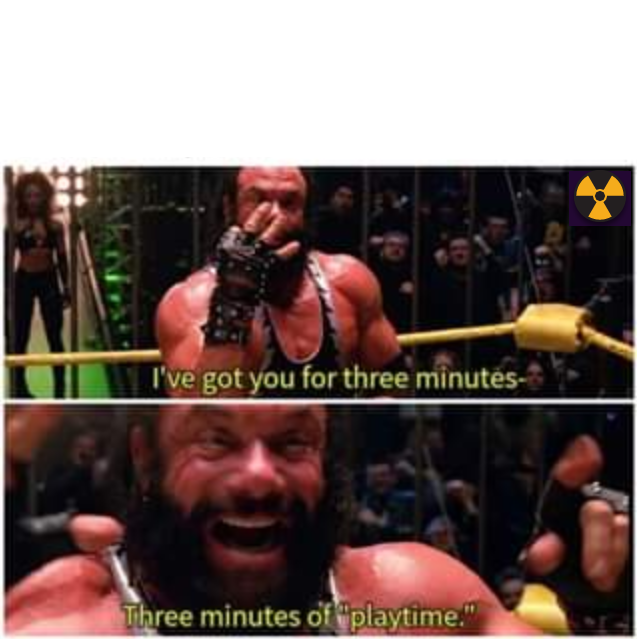
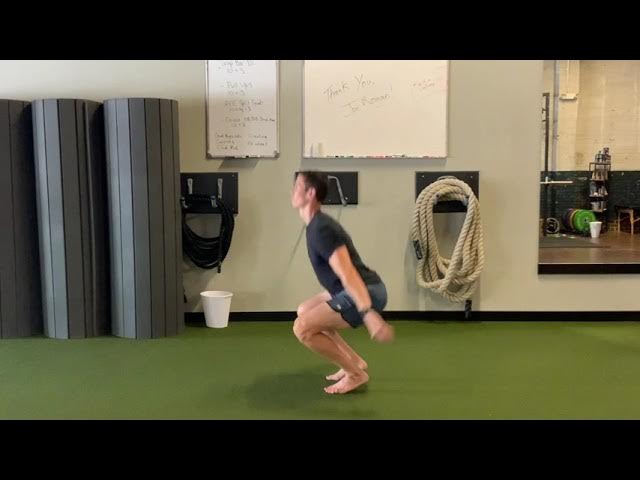
 If you get the reference, kudos to you. Can you last 3 minutes in the Bigfoot Exercise Challenge? 


It may not look like much but it is for sure a great exercise for the legs. It is a little out there especially with the name but the effects of it are more than what people think. When you first see it, where the hell is the resistance, what does the range of motion initially? Give it a go and see what happens.

Pretty quickly you'll feel it in your thighs and your ass. If you can do it for a good length of time, you'll feel quite the sensation (even within 30 seconds). It is no joke especially if you want to condition the legs along with strength & durability. Here's the reality, many people even at a higher level of training don't always know what works and what should be thrown in the trash (CrossFit anyone?). A lot live in this dogmatic world that consistently believes that more weight comes to more results, the greater range of motion means more results and that compound movements such as the Squat & Deadlift are the kings of developing the lower body. Don't get me wrong, those lifts are essential to many things such as powerlifting, strongman training and certain aspects of sports specific training but they're not Mount Olympus caliber either. 

Here's a shocker for you: Many movements end up being in a partial range of motion. Not only that, but also because of the dynamics and mechanics of a lot of movements, there are a ton of Semi-Unilateral & Semi-Bilateral moves that are similar to the Bigfoot Walk. Think about it for a second like a martial artist or a wrestler, if their stance is too wide, his power and speed won't be as effective plus they can be caught easier in specific positions. With a firm and balanced stance (watch a wrestler like Dan Gable or Jordan Burroughs), it's a little more closed in, it's not spread out and out of unison. Similar to a Hockey Player, he needs that balance on those skates, if his range of motion is out of sync with controlling the puck, he's going to tear a groin, skates will go berserk and he can't be at his best or even at the most basic level of play. 

This particular movement is a lot more useful to do for real life and sports. It's weird to look at but it's not any weirder than crouching and walking through bushes or practicing various stances in wrestling or other combat sports. You're only squatting down a bit but instead of coming back up, you stay in that position and move around or hold for a period of time, simple but not as easy as it looks. People with knee issues (small levels) could benefit from this exercise. It creates constant tension and you're shifting from one leg to another. 


This is just another look at the wide range of exercises you can learn from such as the ones from Movement 20XX that incorporate full body application and progressions that hit many muscle groups and can get you in killer condition and long-term strength whether you're an athlete, a complete beginner, older trainee or just those who want to be in shape for the long haul. Some of these may be too advanced for some but overall, these exercise will take you to places in your fitness journey you may haven't experienced before. 

Be adventurous, take up the challenge if you can. If you can't last the full 3 minutes that's ok, build up to it little by little. Keep striving to be better and keep being amazingly awesome.  


Sign Up

Contact Form

Name

Email *

Message *