Thursday, May 22, 2025

Ready To Go Beast Mode With Movement 20XX?

It’s time to break free from the cookie-cutter gym grind and tap into something primal, something real. If you’re tired of soulless reps and chasing numbers that don’t mean jack shit for how you move in the real world, then Vahva Fitness’ Movement 20XX might just be the spark to ignite your inner beast. This ain’t your typical fitness program—it’s a philosophy, a lifestyle, and a damn powerful way to reclaim your body’s potential. Let’s really get into what makes this course a game-changer, straight-up.

What the bloody Hell Is Movement 20XX?

Movement 20XX, crafted by the Finnish fitness rebels Samuli Jyrkinen and Eero Westerberg, is Vahva Fitness’ flagship program. It’s a bodyweight-based system that blends strength, mobility, and flow into a holistic approach to fitness. Forget the bro-science of “lift heavy or go home.” This course is about moving like an animal, flowing like a martial artist, and building a body that’s as functional as it is jacked. Drawing from martial arts, gymnastics, calisthenics, and even a pinch of yoga, it’s designed to make you strong, limber, and ready for anything life throws at you.

The program’s core philosophy? Your body is built to move in a million dynamic ways, not just to pump iron in a straight line. It’s about mastering lizard crawls, animal flows, pull-ups, and movement patterns that make you feel like a predator, not a robot assassin. With a 6-month structured plan, HD video tutorials, and lifetime access, Movement 20XX is your blueprint to becoming a versatile, injury-resistant badass.

Why Movement 20XX Hits Different

Here’s the raw deal guys: most fitness programs are obsessed with making you work that "no pain, no gain" bullshit and "ground and pound" you into the earth instead of making you better. Movement 20XX flips that script. It’s not about redlining your body into a sore, broken mess. Instead, it’s about precision, control, and progression. Here’s why it’s worth your time:

Holistic Gains, No BS: This program hits strength, mobility, and flow in one insane package. You’re not just building biceps; you’re improving joint health, coordination, and agility. Lizard crawls and animal flows torch your core and make every joint in your body bulletproof. Many users of this program, who ditched kettlebells and other implements after battling lower back pain, reported feeling “amazing” after six months—stronger, more mobile and pain-free.

Going Beyond The Gym: You don’t need a fancy gym or equipment. A small room and maybe a pull-up bar are enough to dominate these workouts. Perfect for those of us who’d rather train in a park or at home than deal with crowded gym bros. The workouts are short—15 to 30 minutes—but don’t let that fool you. They’ll humble you, they've hit me hard at times and I still felt like a million bucks.

Cub to Beast: Whether you’re a couch potato or a seasoned athlete, Movement 20XX scales to your level. Beginners get clear coaching to nail the basics, while advanced movers can crank up the intensity with harder progressions. Maria, a mom who learned cartwheels for the first time, unlocked moves she never thought possible. That’s the kind of empowerment we’re talking about.

Fun as Hell: Let’s be real—most workouts are so tedious and boring. Not getting that crap here. The animal-inspired flows (think bear crawls, monkey walks, and low-flow rolls) and creative movement patterns keep things fresh. It’s like playing while getting shredded. Users rave about how the workouts “never get dull” and feel like a dance with your own body.

Injury-Proof Your Body: Unlike programs that grind your joints into dust, Movement 20XX prioritizes posture and structural balance. It’s helped a ton of people who had ankle, knee, and hip pain, move pain-free and build muscle. The focus on mobility and proper form means you’re not just chasing gains—you’re building a body that lasts.

The Gritty Details: What You Get

When you sign up for Movement 20XX, you’re not just buying a course—you’re investing in a transformation. Here’s what’s in the package:

Nearly 100 HD Videos: Eero Westerberg himself walks you through every move with crystal-clear demos. No guesswork, just precise instruction on what to do and what not to do.

6-Month Training Plan: Daily workouts and weekly schedules take the thinking out of your training. It’s plug-and-play, with progressions that evolve as you get stronger.

Five Core Elements: The program breaks down into lizard crawls, climbing, squats, static strength, and active flexibility. Each targets different aspects of movement, from explosive power to fluid grace.

Flow Routines: Eleven structured flow routines blend movements into seamless sequences. Think of it as choreography for your inner warrior. Plus, a free expansion library that adds even more flows to keep you progressing and learning.

Lifetime Access: Pay once. The Recommended Package which gives you the Full access to Movement 20XX. Your access never expires All content and bonuses included. 6-month training program plus a Special: Movement MasterClass is under $300. 

If you want to go for the Personalized Experienced which includes all the stuff the Recommended Course has but you also get an additional 3 months of online coaching with Eero Westerberg (Includes a personalized plan, 2 consultation/coaching calls, email support and form check analysis) which is at under $2500

Compare that to $60-$100 per session for a personal trainer who might not even get movement training.

Money-Back Guarantee: Vahva stands behind their product with a 30-day, no-questions-asked refund policy. That’s confidence in their system.

The Real Talk: Pros and Cons

No program is going to be perfect, so let’s cut through the hype.

Pros:

Transformative: Users report insane improvements in mobility, strength, and confidence. One 44-year-old dude said he felt better than he did in his 20s.

Versatile: Works for all levels, from newbies to pros like UFC champ Jiri Prochazka, who trained with Eero.

No Equipment Needed: Ideal for home workouts or travel.

Fun and Engaging: The creative flows make training feel like an adventure, not a chore.

Holistic Approach: Combines physical and mental fitness, inspired by Finnish grit and Eastern movement practices.

Cons:

Pricey Upfront: Paying 4 digits, it’s a quite an investment compared to apps like Cali Move ($60). Is it worth it? If you value true quality and lifetime access, hell yeah. But it’s not cheap.

No Native App: The platform is mobile-friendly, but it’s not a dedicated app, which can feel clunky on phones.

No Progress Tracking: You’ll need to track your own gains, as there’s no built-in system for logging progress.

Not for Everyone: If you’re all about bodybuilding or maxing out deadlifts, this might feel too “flowy” for your taste. It’s for those who want to move better, not just look bigger.

Who’s This For?

Movement 20XX is for anyone who wants to own their body, not just sculpt it. It’s for:

Fitness enthusiasts bored with repetitive gym routines.

People recovering from injuries who need a low-impact, joint-friendly program.

Athletes looking to boost performance in sports, martial arts, or dance.

Beginners who want a structured, scalable way to get fit without a gym.

Warriors who crave a challenge that’s as mental as it is physical.

If you’re the type who wants to flow like a panther, lift like a gorilla, and move without pain, this is your jam.

The Verdict: Is Movement 20XX Worth It?

Fuck yes, it’s worth it—if you’re ready to commit. Movement 20XX isn’t just a workout; it’s a mindset shift. It teaches you to move with purpose, to respect your body’s natural design, and to push your limits without breaking yourself. The price tag might sting, but with lifetime access and a money-back guarantee, it’s a low-risk bet on a stronger, more capable you. Users like Annie, at 65, gained mobility they never thought possible. That’s the kind of impact we’re talking about.

This program isn’t about chasing six-packs or ego-lifting. It’s about becoming a functional, confident, and resilient human. If you’re ready to ditch the treadmill and unleash your inner beast, Movement 20XX is your ticket. Check it out at and start moving like you were born to.

Now, go dominate. πŸ’ͺ

Stay strong, stay mighty and be amazingly awesome.

Shoot Me A Comment

Email Me Using The Contact Form

Share This Article On Social Media

Disclaimer: Always consult a doctor before starting any fitness program, especially if you’ve got pre-existing conditions. Train smart, not reckless.

Note: Prices and details are based on available info as of 2025 and may change. For the latest, hit up Vahva Fitness.

Wednesday, May 21, 2025

Unleashing The Power Within With Brooks Kubik’s Isometrics And Iso-Hold Strength Training


Time to talk about a course that may be overlooked in the modern age of Strength Training. Ready to learn some kick ass stuff? Then be prepared to forge strength, where sweat, focus, and raw power collide to sculpt bodies and minds into unbreakable steel. Today, we’re going to go into a tome of physical culture that’s as primal as a saber-tooth’s roar and as effective as a sledgehammer to a nail: Isometrics And Iso-Hold Strength Training by the legendary Brooks D. Kubik. If you’re chasing superhuman strength, tendon-snapping power, and a physique that screams “I conquer worlds” this book is your battle-axe. Strap in, because we’re about to tear through this masterpiece that's raw, real, and unrelenting.

Brooks Kubik, the five-time national bench press champion and author of the cult classic Dinosaur Training, doesn’t mess around. His Isometrics And Iso-Hold Strength Training isn’t some fluffy fitness pamphlet peddling quick fixes or Instagram-worthy poses. Hell nah, this is a manual for building strength that echoes the old-school greats—think Gama, Zass, and Jowett—while delivering practical, no-BS methods for modern iron soldiers. Kubik has been in the trenches, hoisting heavy iron for over half a century, and in his late 60's, he’s still crushing it in his home gym. The man’s a living testament to the power of his principles.

So, why isometrics, especially coming from one of the all time great Drug Free Lifters? Let’s cut through the noise. The internet’s full of keyboard warriors who’ll scoff, “Isometrics are worthless!”—probably parroting some bro-science they read somewhere where an "expert" wouldn't know his ass from his elbow. Kubik shuts that crap down with a single glance at his cover photo: a chiseled, muscular frame that screams, “I’m built by hard work, not hashtags.” Isometrics—exercises where you push, pull, or hold against immovable resistance—aren’t just effective; they’re a cornerstone of strength that’s been forging strongmen for a VERY long time. From Alexander Zass snapping chains in a POW camp to Bruce Lee’s shredded power, isometrics are the secret sauce for strength that lasts.

Kubik lays out the case with the precision of a blacksmith hammering steel. Here’s why from his perspective that Isometrics deserve a place in your training arsenal....

Isometrics are a godsend for older lifters or anyone nursing dings and dents. No ballistic movements to aggravate injuries—just pure, controlled tension. Kubik, a Dino who’s seen six decades of iron, knows that intensity, training doesn’t have to mean wrecking your body. Isometrics let you push your limits while keeping joints happy.

Got a sticking point in your bench press or deadlift? Isometrics let you zero in on specific ranges of motion, turning weaknesses into strengths. Push against a bar at your sticking point, hold it with max effort, and watch your numbers soar. It’s like laser-guided missile training for your muscles.

Isometrics demand focus sharper than a samurai’s katana. When you’re straining against an unyielding force, there’s no room for daydreaming. Kubik emphasizes that this mental intensity builds not just muscle but a mind-muscle connection that elevates every lift. It’s you versus the resistance, and you learn to own it with incredible intensity.

No gym? No problem. Isometrics can be done with a wall, a strap, or even your own body. Kubik shows how to integrate them with barbells, dumbbells, or bodyweight exercises. Short, intense sessions deliver massive gains without eating up your day.

Here’s where isometrics shine brighter than a supernova. While dynamic lifts build muscle, isometrics forge tendons and ligaments into iron cords. Kubik channels the wisdom of old-time strongmen like George F. Jowett, who swore by heavy holds to build unshakable strength. Stronger tendons mean bigger lifts and fewer injuries.

Muscularity and Definition

Pair isometrics with a solid diet, and you’ll carve a physique that’s both powerful and aesthetic. Kubik’s not about the comic book bodybuilding look—he’s about functional, rugged muscle that works. Isometrics crank up time under tension, sculpting slabs of lean mass that pop.

Isometrics And Iso-Hold Strength Training is part of Kubik’s Training Series, and it’s a lean, mean 100+ pages of pure gold. No filler, no bull—just actionable advice delivered with the grit of a man who’s walked the walk. Kubik breaks down the science and history of isometrics, from the ancient warriors who used static holds to modern studies proving their effectiveness (like those showing 70-75% MVC for hypertrophy gains). But this ain’t a dry textbook. Kubik’s writing is like a pep talk from a grizzled coach who’s seen it all, laced with stories of old-school legends and his own journey.

What does it cover?

The Why: A deep dive into why isometrics work, debunking myths and showcasing their benefits for strength, recovery, and performance.

The How: Practical protocols for integrating isometrics into your routine, whether you’re a powerlifter, strongman, or weekend warrior. Think 6-12 second max contractions, 60-90 second holds at 30-60% effort, or iso-holds in a power rack.

The What: Specific exercises, from wall presses and strap pulls to power rack holds and bodyweight isos. Kubik even throws in tips for using chains or belts, nodding to strongmen like Steve Justa.

The Who: Guidance for everyone—young bucks, grizzled vets, injured athletes, or desk jockeys looking to get strong without a gym.

The Mindset: Kubik’s all about mental toughness. Isometrics aren’t just physical—they’re a forge for your will, teaching you to push through discomfort and emerge stronger.

One standout is Kubik’s nod to “isometronic” training—short-range movements followed by static holds in a power rack. This hybrid approach, inspired by Jowett’s heavy partials, builds insane strength by combining dynamic and static stress. Picture squatting a heavy bar a few inches, then holding it motionless for 6-10 seconds. That’s the kind of brutal, effective work Kubik champions.

I’ve been hammering isometrics for years, inspired by the likes of Bud Jeffries, Steve Justa, and, of course, Kubik. It’s not just about the lifts or using your bodyweight. Isometrics, as Kubik teaches, are a mental game-changer. Holding a 90-second plank at 40% effort (try it—it’s harder than it sounds) or straining against a strap like Gama wrestling a tree forces you to confront your limits. You learn to breathe, stay calm, and push. That mental grit spills over into life—meetings, challenges, whatever. You become a force, unyielding and unstoppable.

I also love Kubik’s versatility. I travel at times and with his bodyweight isos—like pressing palms together or pulling against a towel—I can train anywhere. That’s the beauty of Kubik’s system: it’s simple, brutal, and effective.

Kubik’s no lone wolf. He stands on the shoulders of the all time greats—Jowett, Sandow, Zass, and Peary Rader—while carving his own legend. His Dinosaur Training revolutionized strength training in 1996, reminding a world obsessed with machines and steroids that real power comes from hard work and heavy iron. Isometrics And Iso-Hold Strength Training continues that legacy, shining a spotlight on a forgotten art and making it accessible to all.

What sets Kubik apart is his ethos: strength for life. In his 60's, he’s not chasing trophies—he’s chasing health, vitality, and the joy of hoisting iron. He and his wife, Trudi, grow their own food, hike, and live a life of rugged simplicity. Kubik’s not selling you a supplement or a gimmick; he’s giving you tools to forge your own path.

If you’re serious about strength, Isometrics And Iso-Hold Strength Training isn’t optional—it’s essential. It’s a masterclass in building power that’s functional, sustainable, and badass. Whether you’re a powerlifter busting through plateaus, an older lifter preserving your edge, or a newbie looking to get strong without a gym, Kubik’s got you covered. This book will make you rethink what’s possible, push you to train smarter, and ignite a fire for old-school training.

Be amazingly awesome and continue building your own journey. 

Shoot me a comment

Email me using the contact form

Subscribe to get articles sent to your email

Share this with your followers on social media

Tuesday, May 20, 2025

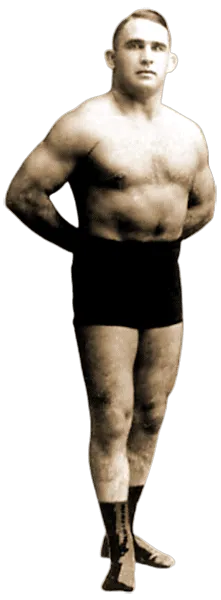
The Unbreakable Legacy of Ed "Strangler" Lewis: A Wrestling God Who Defined The Sport

You guys ready to talk about a straight-up beast—a man who didn’t just wrestle but dominated the squared circle like a force of nature. Ed "Strangler" Lewis wasn’t just a wrestler; he was a damn institution. A colossus of the early 20th century who made the world believe in the raw, unrelenting power of professional wrestling. If you’re ready to dive into the story of a legend who crushed opponents, revolutionized the game, had the endurance of a superhero and left a legacy that still echoes today, strap in. This is the tale of the one, the only, Ed "Strangler" Lewis. πŸ’ͺ

Born to Rule The Mat

Picture this: June 30, 1891, in Nekoosa, Wisconsin. Robert Herman Julius Friedrich enters the world, a kid who’d grow into a mountain of a man—250 pounds of pure strength and power with a chest measuring a monstrous 56 inches. This wasn’t just a guy; this was a gladiator in the making. By 14, he’s already tossing grown men around in Louisville, Kentucky, under the name Ed Lewis, a nod to 1890s star Evan "Strangler" Lewis and a sneaky way to keep his disapproving parents in the dark. Smart move, young champ. 😎

But where’d that "Strangler" nickname come from? Some say it was a tribute to Evan’s legacy. Others point to a wild story from a match in France where Lewis slapped on a sleeper hold so vicious the crowd thought he was choking his opponent out for real. Either way, the name stuck, and it fit like a glove. This man wasn’t just wrestling—he was shattering the competition’s hopes and dreams.

The Gold Dust Trio: Carving The Industry That Leads To An Ever Lasting Legacy

Lewis wasn’t just a grappler; he was a visionary, a mad scientist if you will. In the 1920s, he teamed up with promoters Toots Mondt and Billy Sandow to form the Gold Dust Trio, a game-changing crew that turned wrestling from one-off barroom brawls into a full-blown spectacle. These guys didn’t just book matches; they created events. Undercards, storylines, feuds that had fans losing their minds—this was the birth of modern pro wrestling as we know it. Lewis was the star, the muscle, and the brains behind it all. He didn’t just win titles; he built an empire. πŸ†

And win titles he did. Lewis snagged his first World Heavyweight Wrestling Championship on December 13, 1920, by outclassing Joe Stecher. He’d go on to hold the world title five times (some say up to ten, depending on the record books), ruling the sport for nearly two decades. Over a career spanning four decades, Lewis wrestled in over 6,200 matches—legit shoot fights and worked bouts alike—and lost only 33 times. Let that sink in. That’s not a record; that’s a myth. The man was untouchable. He could go with anybody at anytime he wanted.

The Strangler’s Grip: A Style Like No Other

What made Lewis so fucking terrifying? His catch wrestling prowess. This wasn’t flashy flips or choreographed drama—this was pure unadulterated pain. Lewis was a master of "hooking," using brutal holds to make opponents tap or nap. His signature move? The Strangler’s headlock, a proto-sleeper hold that could put anyone to sleep—permanently, if he wanted. Lou Thesz, Verne Gagne, and others called him the greatest ever, saying he’d only lose when he chose to, to push a storyline. That’s power. That’s control. 😀

One of his wildest moments? September 20, 1934, at Wrigley Field. Lewis faced Jim Londos in front of 35,275 screaming fans, pulling in a record gate of $96,302—a mark that stood until 1952. Or how about 1936, when he took on Lee Wykoff in one of wrestling’s last legit shoot matches? Lewis, nursing a separated clavicle, still fought to a draw. The man was a warrior, plain and simple. Even in 1937, wrestling in New Zealand, he went 4-2 against top talent, only falling to Canadian champ Earl McCready. No one could keep him down for long. 

Rivalries and Real Talk

Lewis’s biggest rival? Joe Stecher. These two titans clashed in and out of the ring, even sparking one of wrestling’s first promotional wars when Stecher ran his own shows against Lewis’s Gold Dust Trio. Their most epic battle? A five-and-a-half-hour marathon on July 4, 1916, ending in a draw because neither man could break the other. That’s not wrestling—that’s war if there ever was one. Their feud hit a peak in 1925 when Stanislaus Zbyszko, a Gold Dust Trio star, double-crossed Lewis' camp by legit beating their handpicked champ, Wayne Munn, to humiliate them. Wrestling was wild back then, and Lewis was at the heart of it all. πŸ₯Š

But not every match was a classic. In 1933, Lewis faced Ray Steele (a legit wrestler himself) at Madison Square Garden for the title. The two circled each other, barely locking up, and the fans got bored. Sometimes, even legends have off nights. Still, Lewis’s ability to draw crowds, even in controversy, was unmatched. He was the Babe Ruth of wrestling, rubbing shoulders with the Yankee slugger and Jack Dempsey, the era’s biggest stars. Hell, there’s even a photo from April 16, 1935, of Lewis putting Ruth in a headlock. Iconic.

The Later Years: Blind but Unbowed

By 1935, Lewis was semi-retired, frustrated with wrestling’s shift toward “slambang” entertainment over real grappling. But the fire never left him. In 1942, at 51 years old and legally blind from trachoma, a brutal eye condition common in wrestlers, he stepped back into the ring. Think about that—a blind man wrestling. And he kept going until 1948, retiring at 57. That’s not just heart; that’s soul and the will to keep fighting. πŸ’₯

Even after hanging up his boots, Lewis’s influence lived on. He trained legends like Lou Thesz, his protΓ©gΓ©, along with Danny Hodge, Dick Hutton, and Judo Gene LeBell, passing down his hooking secrets. Thesz became a world champ, carrying Lewis’s torch. The Strangler didn’t just shape his era; he shaped wrestling’s future. 

The Final Bell

On August 8, 1966, Ed "Strangler" Lewis passed away in Muskogee, Oklahoma, at 75. Newspapers across the country hailed him as a pioneer who made wrestling a global phenomenon. His health battles—especially the blindness that plagued his final years—never dimmed his spirit. He’d earned millions in the ring and spent it like it was nothing, living life as big as his legend.

Today, Lewis is immortalized in every major wrestling hall of fame: Wrestling Observer Newsletter (1996), George Tragos/Lou Thesz (1999), Professional Wrestling (2002), WWE Legacy Wing (2016), and International Professional Wrestling (2021). His name is synonymous with greatness, a reminder of a time when wrestling was raw, real, and ruled by legit grappling warriors.

Why Does The Strangler Matter

Ed "Strangler" Lewis wasn’t just a champion; he was a revolution. He took a gritty, underground sport and made it what we see today. He fought through injuries, blindness, and changing times, never backing down. He trained the next generation, ensuring his art would live on. In the 1920s and ‘30s, he stood shoulder-to-shoulder with Babe Ruth, Jack Dempsey and other greats, not just as an athlete but as a myth.

So, next time you watch a wrestling match, remember the man who laid the foundation. The man who strangled doubt, crushed rivals, and built a legacy that’ll never tap out. Ed "Strangler" Lewis—the original powerhouse, the ultimate might. πŸ‹️‍♂️

What’s your favorite Strangler story? Drop it below and let’s celebrate this crazed SOB together! πŸ’¬

Be amazingly awesome and learn the valued history of the great sport of Catch As Catch Can Wrestling.

Power And Might's Comment Policy

Train hard, talk real. Disagree with respect, not hate. Share wins, ask questions, drop knowledge. No spam, bots, or cheap shots — you’ll get pinned fast. Comments will be moderated and can delete anything that doesn't suit what this blog stands for. Must have a Google Account in order to Comment. We’re here for Power and Might, not power trips. Keep it strong. Keep it real. Keep killing it and be Amazingly Awesome.

Power And Might Uses Affiliate Links. Read Full Disclaimer HERE!!!

Affiliate & Medical Disclaimer I’m an affiliate for some of the products I recommend. If you buy through my links, I may earn a commission at no extra cost to you. I only promote Quality Equipment and Supplements I actually use or believe in for building explosive strength, power and other physical & mental attributes. Medical Disclaimer: I’m not a doctor, physician, or certified medical professional. Nothing on Power & Might is medical advice. Always consult your physician or a qualified healthcare provider before starting any new fitness program, diet, or supplement — especially if you have pre-existing conditions or injuries. Supplement Warning: Do your own research. Read labels and ingredient lists carefully before using any supplement. If you have allergies, medical conditions, or take prescription medications that could interact, do not take them. Supplements are not intended to diagnose, treat, cure, or prevent any disease. They’re tools — not magic. Train hard, train smart, and take responsibility for your health. If you get value from the blog, drop a comment on any article.