Tuesday, May 6, 2025

Why You Should Crush Workouts While Traveling

Lets talk about keeping your gains and your sanity intact while you’re out there conquering new lands or just making those pleasurable trips more interesting. Traveling—whether it’s for work, adventure, or just vibing in a new spot—can be a beast that tries to derail your fitness. however; we're not going to bow to excuses, are we? Hell no. Exercising while traveling isn’t just a flex; it’s a game-changer that keeps your mind sharp, your body strong, and your spirit unbreakable. Let’s break down why you need to pack your discipline alongside your passport and make every trip a chance to level up.

1. Stay a Savage, No Matter the Zip Code

When you’re bouncing between airports, hotels, or Airbnbs, it’s easy to let your routine slip. New surroundings, weird schedules, and that sneaky voice saying, “You’re on vacation, chill.” No way. Sticking to your workouts as best as you can on the road is a declaration of dominance. It’s you saying, “I control my destiny, not my itinerary.” A quick hotel room HIIT session, a run through the streets or on the beach of a new city, small town or hitting a local gym keeps your momentum roaring. Consistency is king, and kings don’t take days off just because they crossed a border.

2. Smash Stress, Jet Lag Or Those Long Hours In The Car Like a Boss

Travel can be a meat grinder for your mental state—long flights, time zone hops, and the chaos of navigating unfamiliar turf. Exercise is your secret weapon to crush that noise. A solid sweat session pumps endorphins, torches anxiety, and resets your internal clock. Studies back this up: aerobic exercise can cut jet lag recovery time by regulating your circadian rhythm (look it up, science is crazy). So, when you land, lace up your kicks, find a park, and sprint it out. You’ll feel like a god while everyone else is popping melatonin and giving themselves a hard time.

3. Explore Like a Beast, Not a Tourist

Ditch the basic sightseeing bus and turn your workout into an adventure. Run through the cobblestone streets of Rome at dawn. Do pull-ups on a beachside bar in Bali. Hike a mountain trail in Colorado with a weighted pack. Exercising while traveling lets you experience a place in a raw, primal way. You’re not just seeing the world—you’re owning it. Plus, you’ll stumble on hidden gems no guidebook will ever show you. That’s the kind of story that makes you a legend at the bar later or just taking it easy later at cool restaurant or whatever.

4. Keep Your Gains, Don’t Let ‘Em Ghost You

Let’s be real: skipping workouts for a week or two can start unraveling your hard-earned progress. Muscle loss kicks in faster than you think, especially if you’re eating like a tourist (pizza in Naples, croissants in Paris, you know the vibe). A quick bodyweight circuit—push-ups, squats, burpees—takes 20 minutes and keeps your muscles engaged. No gym? No problem. Use the WorldFit Iso Trainer for isometric sessions or a park bench for dips. You didn’t grind for that physique just to let it fade because you’re “on the road.”

5. Build Mental Fortitude That Shatters Limits

Exercising while traveling isn’t just about your body; it’s about forging an unbreakable mind. When you’re in a new environment, tired, maybe lost, and still choose to crank out a workout, you’re training your willpower to laugh at adversity. That’s the kind of mental toughness that spills over into every part of your life—business deals, relationships, you name it. Every rep you push through in a cramped hotel room is flipping off to the stereotypes of just laying around. That’s how you become a force of nature. Micro Workouts are very powerful.

How to Make It Happen: No Excuses, Just Execution  

Pack Light, Train Heavy: Bring a jump rope, resistance bands, or just your bodyweight. You don’t need a full gym to go beast mode.

Plan Like a General: Scope out local areas for some kick ass sessions, trails, or parks before you go. Apps like Strava or Google Maps are your recon team.  

Time It Right: Morning workouts beat jet lag and free up your day for exploring. Plus, you’ll feel like a champ while others are still snoozing. Things like loosening up the joints or DDP Yoga, HIIT ect. 

Improvise, Adapt, Overcome: No equipment? Use stairs, benches, or your own luggage. Can’t run outside? Crank out a Tabata in your room. Adaptability is power. I've even used my duffle bag full of clothes as an alternative to the Sandbag. 

Fuel Smart: Travel food can be a trap. Hit local markets for protein-packed snacks like nuts or jerky to keep your macros on point if you're into that sort of thing but overall, keep a good level of eating good while you have fun.

The Bottom Line: Be Unstoppable

Traveling is a chance to test your mettle, not an excuse to slack. Exercising on the road keeps your body chiseled or maintaining your energy and strength, your mind razor-sharp, and your soul fired up. It’s not about being perfect; it’s about being relentless. So, next time you’re packing for a trip, throw in your sneakers and your grit. The world is your gym, and every workout is a chance to prove you’re a cut above. Now go out there, dominate, and make every mile a masterpiece.

Stay strong, stay amazingly awesome.

Monday, April 28, 2025

Why Matt Schifferle's Overcoming Isometrics Is The Most Bad Ass Cheat Code For Strength

Ladies and gents, welcome, gather ‘round the altar of strength, because today we’re diving into one of my personal favorite courses that’ll make your muscles quake and your nervous system bow in reverence. Matt Schifferle’s Overcoming Isometrics: Isometric Exercises for Building Muscle and Strength isn’t just a book—it’s a manual for developing power, a blueprint, a fucking Excalibur for carving out a physique that screams dominance without ever stepping foot in a gym. If you’re ready to tap into the primal entity dormant in your bones, buckle up—this is gonna be a hell of a ride.  

The Gospel of Isometrics: Strength Without Movement

Let’s cut through the bullshit. The fitness world is a circus of fads—an overwhelming level of "influencers", over the top "gurus", and don’t even get me started on those Youtube Videos where a guy does 1 Pull-Up and acts like he's god's gift to fitness. But amidst the chaos and questionable tactics, Overcoming Isometrics stands like a monolith, unyielding, rooted in the timeless truth that real strength comes from tension, not gimmicks. Schifferle, the mastermind/jedi behind Red Delta Project, doesn’t waste your time with fluff. He delivers a system so potent, it’s like hacking your nervous system to unlock Herculean power.  

Isometrics, for the uninitiated, is the ART of generating maximum muscle tension without movement. Think pushing against an immovable wall, squeezing a strap until your veins pop, or holding a position until your soul screams. It’s not about reps or set schemes—it’s about pure and unadulterated intensity. Schifferle’s approach, specifically overcoming isometrics, takes this to another level. Unlike yielding isometrics (like planks, where you’re fighting gravity), overcoming isometrics pit you against an immovable force—your own body, a doorframe, or a WorldFit IsoTrainer. The result? A neural supercharge that makes every fiber in your body fire like a V8 engine.  

This book isn’t just a guide; it’s a manifesto for those who want to build muscle, forge strength, and defy limitations—whether you’re a grizzled lifter or a 75-year-old vet of Physical Culture reclaiming your vitality. Schifferle’s got no patience for dogmatic approaches, and neither do I. Let’s break down why Overcoming Isometrics is the most badass addition to your training arsenal.  

Why This Book Hits Like a Sledgehammer As If In The Hands Of John Henry

It’s the Ultimate Neural Hack

Schifferle drops a truth bomb: your strength isn’t just about muscle size—it’s about your nervous system’s ability to recruit those muscles. Most workouts—free weights, machines, even calisthenics—only use as much energy as needed to move the load. Overcoming isometrics? They demand EVERYTHING. By pushing or pulling against an immovable object, you’re training your brain to fire every motor unit in your body. It’s like overclocking a computer, except the computer is your goddamn biceps. Readers on Goodreads rave about this. One person, after years of push-ups and squats, said, “A couple weeks in, I am seeing progress that I haven’t seen in years.” That’s not hype—that’s your nervous system waking up and saying, LFG.  

No Gym, Not A Problem

You don’t need a fancy gym membership or a rack of dumbbells to get jacked. Schifferle’s system uses your body, your environment, or cheap tools like straps or an IsoTrainer. Doorframes, countertops, even a sturdy table—your house becomes a fortress of gains. This is perfect for travelers, the busy parents, or the minimalist soldiers of muscle who know real strength, doesn’t need a $5,000 squat rack. A reviewer in their mid-70s, who’d long abandoned heavy weights, picked up this book and started training three times a week. “I already feel physically and mentally better,” they wrote. That’s the power of a system that meets you where you are.  

Injury-Proof Your Gains

Let’s really get real here. If you’re over 30 or 40 (like myself), your body’s probably been through some crazy stuff. Dynamic exercises potentially can be brutal on joints, but isometrics? They’re like a warm hug from a grizzly bear. Schifferle explains how overcoming isometrics let you build strength without risking injury, making them a godsend for older lifters or anyone rehabbing. One reviewer noted, “Isometrics is specifically ideal for older individuals who have various injuries and health issues which make dynamic exercises counterproductive.”  

Practical as AF

Schifferle doesn’t bore you with 300 pages of theory or the history of isometrics (that has come and gone). He gets to the point: how to do it, why it works, and what exercises to start with. The book’s packed with clear illustrations, a 4-step process for building muscle, and a breakdown of muscle chains so you know exactly what you’re targeting. A UK reviewer has said without blinking an eye it's  “Not for those looking for theory or history of isometrics, this book is for people who want a practical guide and just get on and do it.”  

The Mind-Muscle Connection

If you’ve ever watched a powerlifter psych up before a deadlift, you know the mind is the real engine of strength. Schifferle hammers this home with the thunderous force of Thor, emphasizing the mind-muscle connection as the secret sauce of isometrics. By focusing on tension, you’re not just training your body—you’re forging mental toughness. It’s not about looking pretty; it’s about becoming a force of nature.

The Grind Style Calisthenics Vibe

Overcoming Isometrics is part of Schifferle’s Grind Style Calisthenics series, and it’s got that same raw, in your face energy that makes his Red Delta Project YouTube channel a goldmine. He’s not some ivory-tower fitness guru—he’s a dude from Vermont who loves biking, skiing, and Ben & Jerry’s (respect). His approach is rooted in Fitness Independence, the idea that you don’t need to live in a gym or starve yourself to be strong. This book embodies that ethos, giving you tools to train anywhere, anytime, with nothing but your body and a will to dominate.  

On places like Reddit, the bodyweight fitness crowd has been singing Grind Style’s praises. One user, three months into the program, said, “I’m getting a lot out of it… I’ve noticed a big improvement in stability and such.” Another called Schifferle “underrated” and swore by the program’s ability to build strength and muscle. I humbly agree and should be recognized a hell of a lot more. 

The One Critique To Put Into Your Noggin': Keep It Simple, But Not Too Simple

No book’s perfect that's for damn sure and Overcoming Isometrics has one minor flaw. Some readers wanted more scientific depth or detailed programming advice. One wrote, “The book provides very little scientific explanation and very little advice on how to actually program workouts. It’s more of an exercise library.” To be fair, it's a reasonable assumption—if you’re a data nerd or a coach looking for periodization charts, you might need to supplement with other resources. But for most of us? The simplicity is where we thrive. Schifferle gives you the tools and trusts you to wield them. If you need more, his YouTube channel’s got your back.  

How to Wield This Power

So, how do you start? Schifferle lays it out clean:  

Choose Your Weapon Of War: Choose exercises that hit your push, pull, squat, or core chains. Use a strap, a doorframe, or just your own body.  

Max Out Tension: Push or pull against the immovable object for 6-12 seconds, focusing on maximum effort. Rest, repeat.  

Mix It Up: Combine overcoming isometrics with yielding isometrics (like planks) or classic calisthenics for a hybrid workout that’ll leave you feeling like Superman.  

Stay Consistent: 20 minutes, 4-5 times a week, is more than enough for the majority to see gains that’ll shock you like the Emperor's Lightning Strikes on Luke Skywalker.

The book’s got a chapter on Hybrid Isometrics, which is like the cherry on top of the most amazing sundae—a masterclass on blending techniques for ultimate results combining Overcoming & Yielding Isometrics into one beast. Schifferle also includes accessory exercises to target weak spots, so no muscle gets left behind.  

Why This Matters in 2025

In a world obsessed with quick fixes and Instagram filters, Overcoming Isometrics is a rebellion. It’s for those who know strength isn’t bought—it’s built. It’s for the animals who want to train smarter, not harder. And it’s for anyone who’s ever felt stuck, injured, or too damn busy to chase their potential. Schifferle’s book is a reminder that power lies within you, waiting to be unleashed. 

The Verdict: Buy It, Live It, Conquer It

Matt Schifferle’s Overcoming Isometrics is a 5/5 for anyone who wants to get stronger, smarter, and more resilient without the cookie cutter crap. It’s practical, powerful, and perfectly aligned with the raw, unfiltered ethos of Physical Culture.

 Whether you’re a beginner, a seasoned lifter, or a senior looking to reclaim your fire, this book will change how you train. Grab it on Amazon, pair it with Schifferle’s Red Delta Project YouTube vids, and start forging a body that commands respect.  

Now, go push a wall until it begs for mercy. Your inner titan’s waiting.  

Stay mighty, stay gritty, stay unbreakable and be amazingly awesome.

Share this article with friends and fellow maniacs on Social Media.

Shoot me a comment or use the contact form to email me. Be respectful. 

Saturday, April 26, 2025

Strength Built On Spikes


The Epic Power of Neuro-Grip Pushup Handles (Power T Push-Up Spikes)

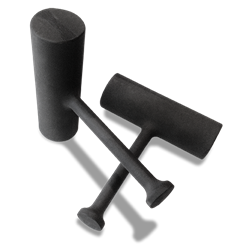
In the realm of bodyweight training, where bad asses forge strength from simplicity, a device that lurked in the shadows and became a tool of Strength Enthusiasts has emerged: the Neuro-Grip Pushup Handles. These unassuming tools, crafted from aeronautics-grade aluminum, are not just equipment—they’re a challenge, a gauntlet thrown at the feet of anyone daring to push their limits. Championed by strongman and Neuro-Mass author Jon Bruney, Neuro-Grips are designed to transform the humble pushup into a crucible of strength, balance, and mental fortitude. The man that invented the tool was Gary Bowes, a Fireman by trade.

The Mythic Origin of Neuro-Grips

Picture a world where pushups, though mighty, have become the norm. The floor is familiar, the movement mastered. Enter Jon Bruney, a titan of strength, who envisioned a tool to shatter complacency. The Neuro-Grip Pushup Handles, introduced by Dragon Door, are no ordinary pushup bars. These solid, one-piece grips, with their anodized finish, are as unforgiving as they are elegant. They’re not here to coddle you—they’re here to test you, to demand precision, and to forge a vice-like grip, a core of steel, and forearms that could crush stone. As for Gary, who created the original design, wanted to take bodyweight training into another realm of strength using a basic element and turning it into a weapon of power that made the tendons and ligaments like steel and the muscles hardened like an iron shield.

Bruney’s philosophy, rooted in his Neuro-Sets—combinations of grinds, isometrics, and explosives—infuses these handles with purpose. They’re not just about doing pushups; they’re about doing them with such intensity that your entire system enters neural overdrive, unlocking strength you didn’t know you possessed. Trust me, just doing a few of these is no easy task, if it was, this tool wouldn't be legendary. See for yourself here.

Why Neuro-Grips Are the Ultimate Challenge

Unlike traditional pushup bars, Neuro-Grips are a beast of their own. Here’s why they stand alone in the pantheon of fitness tools:

Unrelenting Instability: Neuro-Grips are designed to be unforgiving. Their T-shaped design forces you to master balance, engaging your forearms, shoulders, and core in ways a flat floor never could. One wrong move, and you’re kissing the ground (And not like Katy Perry coming back from Space). This instability isn’t a flaw—it’s the point. It demands focus, turning every rep into a battle of mind and muscle.


Extended Range of Motion (ROM): With Neuro-Grips, you can lower your chest below the level of your hands, amplifying the stretch and contraction of your pecs, triceps, and deltoids. This increased ROM makes every pushup more intense, recruiting more muscle fibers and sparking greater gains.

Core and Grip Annihilation: These handles don’t just work your upper body—they obliterate your core and grip. Holding the grips requires constant tension, sculpting your forearms and strengthening your wrists. Your abs and glutes fire to maintain a plank-like stability, making Neuro-Grips a full-body crucible.

Portability and Durability: Crafted from lightweight, aeronautics-grade aluminum, Neuro-Grips are built to withstand the heaviest athletes and the toughest workouts. Toss them in a gym bag or take them to a park—they’re ready for battle anywhere.

A Humbling Experience: Even pushup veterans find themselves humbled. Users report dropping from 50 standard pushups to a mere handful with Neuro-Grips. This isn’t defeat—it’s rebirth. Each rep is a chance to rebuild stronger, sharper, and more disciplined.


The Epic Quest: Mastering Neuro-Grip Pushups

Embarking on the Neuro-Grip journey is not for the faint of heart. It’s a quest that demands preparation, progression, and respect for the tool. Here’s how to conquer it:

Step 1: The Initiation

Start slow. Neuro-Grips are not a toy—they’re a challenge that requires solid pushup form and wrist strength. Begin with planks on your knees, holding the grips for 30 seconds per set. Focus on wrist alignment and core engagement. Progress to full planks when you can hold for three sets without wobbling.

Pro Tip: Practice on a soft surface like a carpet or grass to master bailing out safely. Neuro-Grips don’t forgive sloppy form, and bloody knuckles are a harsh teacher. Happened to me in the beginning many many moons ago.

Step 2: The Grind

Once planks feel steady, move to knee pushups with the grips. Aim for 3 sets of 20 reps, keeping movements controlled. The instability will feel alien, but embrace it. Your forearms will burn, your core will scream, and your focus will sharpen. When knee pushups become manageable, transition to full pushups, starting with low reps (5-10 per set) and building slowly. As of right now, I've managed 15 in one set and 72 total in a workout at 12 sets of 6 reps.

Step 3: The Ascension

As you grow stronger, experiment with variations. Try slow-mo pushups (10 seconds down, 10 seconds up) to maximize time under tension. Incorporate feet-elevated pushups for added intensity or single-leg pushups to crank up the instability. For the bold, explore slow-mo mountain climbers—holding a plank and bringing knees to chest—to torch your midsection. Even I haven't hit step 3, so don't fret about trying to ascend quickly.

Step 4: The Legend

Mastered the basics? Dive into Jon Bruney’s The Neuro-Grip Challenge book for advanced progressions, from shoulder prehab exercises to gravity-defying stunts. Push the boundaries with ramp up the challenge with plyometric pushups or one-arm Neuro-Grip pushups. The only limit is your imagination—and your strength. This is where men become gods. 

Real Warriors, Real Results

Neuro-Grip users are unanimous: these handles are a game-changer. One user, a 280-pound strongman, went from one-minute knuckle pushups to struggling with just four slow Neuro-Grip pushups after four days. “What a challenge!” he exclaimed, praising their ability to humble even the confident. Another, battling osteoarthritis, found Neuro-Grips allowed pain-free strength training, unlike traditional calisthenics.

On forums like StrongFirst and Reddit, enthusiasts share tales of newfound core strength, grip power, and mental resilience. Adrienne Harvey of GiryaGirl.com calls them “unforgiving” yet transformative, urging users to respect their difficulty. Even skeptics admit the grips add variety and intensity, though some prefer rings for safety. It's that hardcore.

Why Neuro-Grips Reign As A Tool Among The Gods

Compared to traditional pushup bars or rings, Neuro-Grips are in a league of their own. Standard pushup bars reduce wrist strain but lack the instability that makes Neuro-Grips so potent. Rings offer similar stabilization work but are slightly less portable and don’t match the grip challenge. Parallettes, while versatile, are bulkier and less focused on pushup-specific intensity. Neuro-Grips are the perfect storm of portability, durability, and unrelenting challenge.

Are You Ready To Take Action?

The Neuro-Grip Pushup Handles are more than equipment—they’re crucible for forging strength, discipline, and resilience. They’re not for everyone, but for those who crave a challenge, they’re a ticket to Olympus. Grab a pair from Dragon Door (back in stock and shipping now!) and start your epic journey. Check out The Neuro-Grip Challenge book for expert guidance, and join the community of warriors pushing the limits of what’s possible.

Are you ready to rewrite your legend? Grip the handles, brace your core, and let the battle commence.

Disclaimer: Always consult a fitness professional before starting a new exercise program, especially with tools as demanding as Neuro-Grips. Start slow, prioritize form, and listen to your body to avoid injury.

Be amazingly awesome and be sure to subscribe so you can get this and upcoming articles in your email.

Share this post with your friends and fellow maniacs on Social Media.

Shoot me a comment or write to me in the contact form. Looking forward to what you say. Please, be respectful. 

Power And Might's Comment Policy

Train hard, talk real. Disagree with respect, not hate. Share wins, ask questions, drop knowledge. No spam, bots, or cheap shots — you’ll get pinned fast. Comments will be moderated and can delete anything that doesn't suit what this blog stands for. Must have a Google Account in order to Comment. We’re here for Power and Might, not power trips. Keep it strong. Keep it real. Keep killing it and be Amazingly Awesome.

Power And Might Uses Affiliate Links. Read Full Disclaimer HERE!!!

Affiliate & Medical Disclaimer I’m an affiliate for some of the products I recommend. If you buy through my links, I may earn a commission at no extra cost to you. I only promote Quality Equipment and Supplements I actually use or believe in for building explosive strength, power and other physical & mental attributes. Medical Disclaimer: I’m not a doctor, physician, or certified medical professional. Nothing on Power & Might is medical advice. Always consult your physician or a qualified healthcare provider before starting any new fitness program, diet, or supplement — especially if you have pre-existing conditions or injuries. Supplement Warning: Do your own research. Read labels and ingredient lists carefully before using any supplement. If you have allergies, medical conditions, or take prescription medications that could interact, do not take them. Supplements are not intended to diagnose, treat, cure, or prevent any disease. They’re tools — not magic. Train hard, train smart, and take responsibility for your health. If you get value from the blog, drop a comment on any article.